Act I
“The equipment is not cleared yet.”
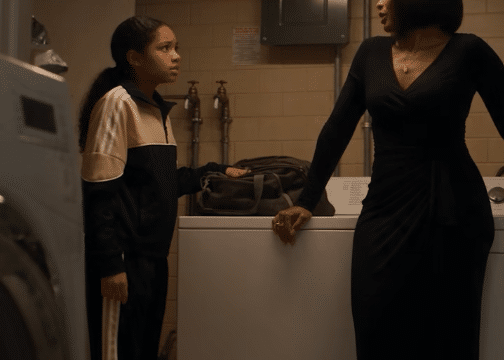
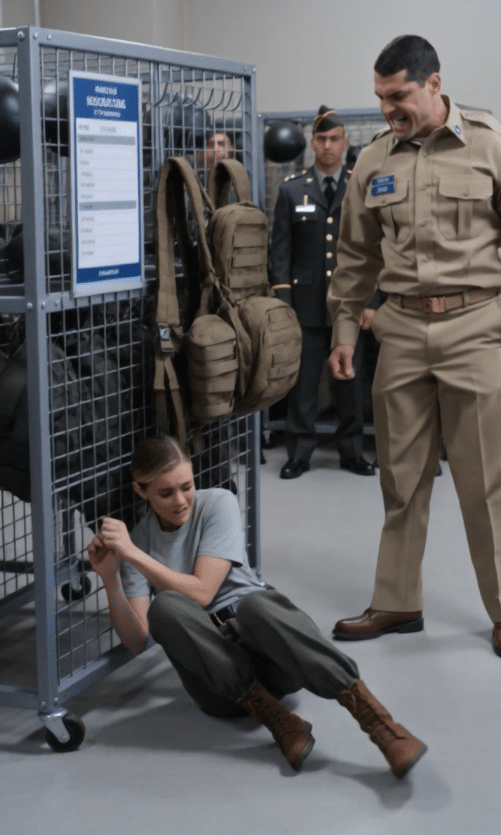
Nora Adams stood in the narrow aisle of the military academy’s equipment room, clutching a safety checklist in one hand and the cabinet keys in the other. Behind her, helmets hung in neat rows, training harnesses filled metal racks, and heavy backpacks waited to be issued for the morning’s safety drill.
Lieutenant Eric Sloan stared at her as though she had just challenged his entire career.
“Give me the keys.”
“Not until the equipment has been cleared, sir.”
Sloan’s jaw tightened. He was thirty-three, wore his uniform with meticulous precision, and had developed a reputation for expecting immediate obedience from everyone around him. Nora was twenty-two, a cadet assigned to the equipment safety team, and she had made the mistake of believing that the checklist mattered more than his temper.
“The gear hasn’t been signed off,” she explained. “I still need to verify the harnesses and record the inspection.”
“I said give me the keys.”
Nora tightened her fingers around them.
“The equipment is not cleared yet.”
For a moment, the only sound was the faint rattle of a helmet shifting on its rack.
Then Sloan stepped forward.
“Trash. Give me the keys.”
Nora looked up at him, startled by the contempt in his voice.
“Sir, I’m following the safety procedure.”
He didn’t answer.
Instead, he drove a forceful kick into her chest.
Nora stumbled backward and crashed against the equipment rack. Helmets shook overhead, a training backpack toppled from its hook, and her safety checklist fluttered to the floor.
The keys slipped from her hand and skidded across the concrete toward the locked cabinet.
Her forearm scraped hard against the metal rack. Pain flashed through her arm, and a thin trace of blood appeared along the scrape.
She gasped, struggling to draw a steady breath.
Several cadets near the opposite shelves recoiled. One covered his mouth. Another took a half-step backward, his eyes moving between Nora and the lieutenant who had just attacked her.
Nobody intervened.
Nora tried to push herself upright. Her hands trembled, and every breath seemed to demand more effort than the last.
“The equipment is not cleared yet,” she repeated.
The words came out strained, but she refused to take them back.
Sloan looked down at her with open contempt.
“You don’t understand your place.”
“I am responsible for the safety check, sir.”
“Your responsibility is to obey an officer.”
He moved closer as Nora reached toward the fallen keys.
Then he kicked her again, striking her back. Before she could pull away, a second kick landed against her side, forcing her to curl inward with a sharp gasp.
The cadets flinched between the racks.
A helmet rolled across the floor and stopped beside Nora’s hand.
Sloan stood over her, breathing hard, showing no sign of remorse.
“You don’t stop an officer,” he said.
Nora’s eyes glistened with pain. She tried to steady her breathing, embarrassed by the helpless position in which he had left her, but her gaze remained fixed on the keys.
Those keys represented more than a locked cabinet.
They represented equipment that had not yet been approved for use.
Then the equipment room door flew open.
General Michael Reeves entered with such speed that the nearest cadets instinctively stepped aside. His dark-green senior uniform and bright rank insignia made his position unmistakable, but it was the expression on his face that silenced the room.
He looked at Nora on the floor.
He looked at the scattered checklist.
Then his eyes settled on Sloan.
Without hesitation, Reeves stepped between the lieutenant and the fallen cadet. He bent down, picked up the keys, and raised them in front of Sloan.
“Back away,” the general said. “You just turned a safety check into a command investigation.”
Sloan’s face lost its color.
For several seconds, he seemed unable to understand what he was hearing.
“Command investigation?”
Reeves held the keys firmly in his hand.
“Yes, Lieutenant. And before this is over, we are going to find out why you believed you could assault a cadet for doing exactly what she was assigned to do.”
Sloan stared at the keys.
He had demanded them because he thought they were the only thing standing between him and immediate compliance.
Now they had become the first piece of evidence against him.
And the general had only just begun asking questions.
Act II
Nora Adams had never imagined that a checklist could put her on the floor.
She had joined the military academy because she believed discipline meant something beyond sharp uniforms and shouted commands. To her, discipline meant doing the unglamorous work correctly, especially when nobody was watching.
She was not the cadet who volunteered first for every speech or tried to impress instructors with grand declarations. She was more comfortable with details: a strap that needed another inspection, a damaged buckle that should be recorded, a signature missing from an equipment log.
Those details were easy to dismiss until something went wrong.
The equipment room was part of a system designed to prevent exactly that kind of failure. Before each training drill, designated personnel checked helmets, harnesses, packs, and other equipment for damage or incomplete maintenance records.
Only after the required checks were completed could the gear be released.
Nora had been assigned to assist with that process under the academy’s established procedures. Her task was not to decide whether she liked a particular officer or whether the morning schedule was convenient.
Her task was to verify that the equipment met the required standard.
The previous evening, she had noticed inconsistencies in several sign-out entries. Some harnesses had been returned without complete inspection records, while other items had been marked as ready without the expected initials on the checklist.
Nothing yet proved that the equipment was defective.
But the missing documentation meant it could not simply be treated as cleared.
Nora recorded the discrepancies and set the affected equipment aside for review. She expected a few questions the next morning, perhaps an irritated instructor or a delay while the paperwork was corrected.
She did not expect violence.
Lieutenant Sloan arrived before the safety check was complete. He wanted the cabinet opened so that the gear could be issued without disrupting the training schedule.
Nora explained the problem.
Sloan dismissed it.
He had already been frustrated by delays elsewhere in the academy. A training group had been waiting longer than expected, and he believed that the equipment team was wasting time over administrative details.
In his mind, the answer was obvious: open the cabinet, issue the gear, and complete the paperwork later.
Nora knew that was not how the procedure worked.
The checklist existed to ensure that the record matched the equipment being released. If the items were issued first, any missing information could become much harder to verify. If an item had a genuine problem, the delay could be more than inconvenient.
It could matter to someone’s safety.
She explained this calmly.
Sloan interpreted her explanation as defiance.
He was accustomed to people moving when he raised his voice. Some did so because they respected his rank. Others did it because they did not want to become the next target of his anger.
Either way, he rarely had to examine his own behavior.
Nora’s refusal unsettled him because she was not trying to outrank him. She was not competing for a better assignment or questioning his personal competence.
She was simply holding the line on a task she had been told to perform.
That left him with a choice.
He could have asked to see the checklist. He could have contacted the responsible supervisor, requested a documented exception if one was permitted, or waited while the discrepancies were resolved.
Instead, he demanded the keys again.
When Nora refused, he decided that the disagreement was no longer about equipment.
It was about whether she could say no to him.
That was the moment the situation became dangerous.
By the time General Reeves entered, the damage extended beyond Nora’s injuries. Sloan had turned an ordinary safety procedure into a test of personal dominance, and the cadets who witnessed the assault had been forced to watch an officer use violence to get his way.
Reeves understood the danger of that message.
A cadet who learned that raising a safety concern could lead to an assault might remain silent the next time something genuinely dangerous appeared. A technician might sign off on equipment without checking it. An instructor might ignore a defect to avoid provoking a superior.
The consequences could travel far beyond one room.
Reeves had been appointed to his new command with instructions to review readiness, training standards, and the systems that protected cadets during demanding exercises.
He had expected paperwork, difficult meetings, and perhaps resistance from people who disliked changes to familiar routines.
He had not expected to walk into an equipment room and find a young cadet on the floor while an officer stood over her.
But he was not going to allow the shock of the moment to replace a proper investigation.
First, Nora needed medical attention.
Then the room needed to be secured, the witnesses identified, and the equipment records preserved.
And Sloan needed to understand that the general’s anger was not the only thing he had to fear.
The evidence would speak long after the shouting stopped.
Act III
“Get medical personnel here,” General Reeves ordered.
One of the senior cadets immediately moved toward the wall phone. Reeves remained between Sloan and Nora while another staff member approached the injured cadet cautiously.
“Cadet Adams, can you hear me?”
“Yes, sir.”
“Don’t try to stand yet. Let the medical team assess you.”
Nora nodded, wincing as she adjusted her position.
Reeves glanced down at the checklist lying near her boots. Several entries were marked, and a short note had been written beside the items awaiting clearance.
He did not need to know every detail of the equipment process to recognize its importance.
“Lieutenant Sloan,” he said, “step away from the cabinet.”
Sloan straightened.
“General, I was trying to keep the training schedule on time.”
“By kicking her?”
“Sir, she refused to release equipment when I gave an order.”
“Did you review the checklist?”
Sloan hesitated.
“No, sir.”
“Did you contact the officer responsible for the safety procedure?”
“No, sir.”
“Did you attempt to resolve the discrepancy through the chain of command?”
Sloan’s expression tightened.
“I expected the equipment to be available.”
“That was not my question.”
“No, sir.”
Reeves held up the keys.
“You wanted access to a cabinet. She told you the equipment had not been cleared. Instead of examining the reason, you assaulted her.”
Sloan glanced toward the cadets watching from the narrow aisle.
“General, I made a mistake.”
“A mistake is signing the wrong line. A mistake is misreading a schedule. What happened here involved multiple deliberate actions.”
The general’s voice remained level.
“That distinction matters.”
He turned to the staff member nearest the sign-out board.
“Secure the equipment records and preserve the current checklist. No one changes an entry, removes a document, or releases the affected gear until the responsible safety officer has reviewed it.”
“Yes, General.”
“Identify everyone who witnessed this incident. Have them provide their accounts separately through the proper process.”
The cadets fell silent.
Sloan’s eyes moved from one face to another, searching for a friendly expression or some sign that the room might still be persuaded to see him as the victim of a misunderstanding.
He found none.
The general then addressed him directly.
“You will remain under supervision and will not contact Cadet Adams about this incident. Your duties involving this equipment process are suspended pending review. Further instructions will come through the appropriate command channels.”
Sloan looked genuinely alarmed.
“You’re suspending me over an argument?”
“I’m securing the situation after an assault. The investigation will determine the full findings and consequences.”
“But she—”
“Do not blame the person you struck.”
The words landed with more force than a shout.
Sloan’s mouth closed.
A medical team arrived moments later and began assessing Nora. Her breathing remained uneven, and she grimaced when they examined her side. They treated the scrape on her forearm and arranged for further evaluation.
Before they escorted her from the room, Nora looked toward the cabinet.
“General?”
Reeves turned to her.
“The equipment still hasn’t been cleared.”
For the first time since entering the room, his expression softened.
“I know, Cadet Adams.”
“The harness records need to be checked against the items. I left notes on the second page.”
“Those records will be preserved. You don’t need to finish the inspection while you’re injured.”
Nora looked down at the checklist.
“I just didn’t want anyone using something that wasn’t ready.”
“You were right to raise a safety concern,” Reeves said. “Now let the medical team take care of you.”
She nodded, and they escorted her out.
Sloan watched her leave.
He had expected the keys to open the cabinet and end the disagreement. Instead, the keys were now being held by the general while the entire equipment room was treated as an incident scene.
His frustration began to shift into fear.
“General, with respect, this could have been handled privately.”
Reeves turned toward him.
“Privately?”
“I mean, without making a scene in front of the cadets.”
“You made the scene when you kicked her.”
Sloan looked away.
“The academy has a reputation to protect.”
“Yes,” Reeves replied. “Which is why we do not conceal serious misconduct to protect someone’s reputation.”
The general motioned toward the sign-out board.
“Who authorized you to bypass the clearance procedure?”
Sloan said nothing.
“Who told you the equipment could be released without the required checks?”
“No one, sir.”
“Then what made you believe you could override it?”
Sloan’s face tightened. He had no satisfactory answer because the truth was too simple.
He had wanted the keys.
Nora had refused.
And he had believed that his anger gave him the right to force her compliance.
Reeves looked at the helmet rack, the fallen backpack, and the checklist on the table where the staff member had placed it for preservation.
“This investigation will examine the assault, the attempted bypass of the safety process, and any relevant failures in supervision or reporting,” he said. “No one will decide the outcome based on rank or personal relationships.”
Sloan’s eyes widened at the last phrase.
Personal relationships.
There was a reason the general had said it.
The appointment of a new commander had brought more than a change in leadership. Reeves had been reviewing how the academy handled safety complaints and whether officers who controlled training schedules had too much unchecked discretion over the people responsible for inspecting equipment.
Nora’s checklist had become part of that larger review.
And Sloan had just placed himself directly inside it.
Act IV
The first evidence came from the equipment records.
The sign-out board showed that several items had been awaiting verification when Sloan demanded access to the cabinet. The checklist confirmed that Nora had recorded the outstanding entries before the confrontation began.
The academy’s procedures required the responsible personnel to resolve those discrepancies before the affected equipment could be released.
Sloan had not followed that process.
More importantly, the evidence did not support his claim that Nora had arbitrarily withheld the keys. She had been performing the task assigned to her, and her written notes showed why the inspection was incomplete.
The witness accounts were consistent about what happened next.
Nora had explained the safety issue. Sloan had demanded the keys, insulted her, and kicked her. After she fell against the rack, he had delivered two further kicks while she tried to reach the keys.
The medical findings documented injuries consistent with her account.
The investigators also examined the room’s access records, the duty roster, and the equipment assignment procedures. Each piece of evidence helped establish the context in which the confrontation had occurred.
Sloan was allowed to provide his account through the formal process. He continued to argue that he had been under pressure to keep the training schedule on time and that Nora’s refusal had undermined his authority.
But being under pressure did not explain why he had attacked her.
Nor did it excuse his attempt to obtain equipment before the required checks were complete.
As the review progressed, a separate concern emerged. Other personnel described occasions when Sloan had treated procedural objections as personal challenges, especially when the person raising them held a lower rank or was still in training.
Those accounts were examined individually rather than automatically accepted as proof of a pattern. The command wanted to establish what had actually happened, not build a case from rumor.
Still, the reports raised a troubling question.
Had people been reluctant to challenge Sloan because they knew he would listen to a legitimate concern—or because they feared what he might do if they did not comply?
General Reeves directed the academy’s appropriate oversight personnel to examine that question alongside the assault.
The investigation was not a public spectacle. Witnesses were interviewed separately, records were secured, and the findings were documented through the proper channels.
Reeves refused to turn the process into a personal feud between a general and a lieutenant.
His responsibility was to ensure that the facts were established and that the outcome followed from them.
When Nora returned after medical evaluation, she was still sore and moving carefully. She was relieved to learn that the equipment had remained secured while the records were reviewed.
She was less comfortable with the attention surrounding her.
Some cadets apologized for not stepping in. Others avoided her, embarrassed by the memory of standing still while Sloan attacked her.
Nora did not demand that anyone call her brave.
She understood that the moment had frightened them. She had been frightened herself.
But she also knew that fear could not become the academy’s standard response to misconduct.
During a formal follow-up meeting, Reeves asked her whether she wanted to add anything to her original statement.
Nora thought for a moment.
“I want the investigation to be fair, sir.”
“It will be.”
“I don’t want the equipment issue to get lost because of what happened to me. Those records still need to be checked. If something isn’t ready, the next person assigned to this job should be able to say so.”
Reeves leaned back slightly.
“That is already part of the review.”
“And I don’t want anyone thinking they need a general in the room before they can report a safety concern.”
For a moment, the room was quiet.
“That,” Reeves said, “is something we need to address.”
The general later met with the responsible training and safety personnel to examine the equipment-release procedure. The review clarified who could authorize release, how discrepancies should be documented, and what cadets should do if an officer demanded that they bypass a required check.
The aim was not to encourage cadets to disregard legitimate orders.
It was to make sure that a safety concern had a clear path for escalation—and that nobody could simply replace that path with intimidation.
The investigation’s findings were ultimately serious.
Sloan had assaulted Nora, ignored the safety issue she was assigned to address, and attempted to obtain equipment before the required clearance was complete. His explanations did not erase the documented sequence of events.
The command initiated formal disciplinary action and reviewed his fitness for continued leadership responsibilities. The final consequences were determined through the established process, rather than through an immediate punishment improvised in the equipment room.
Sloan had entered the room believing that rank would settle every disagreement.
Now he faced the possibility that his own actions would end the career he had spent years building.
When he was formally informed that the case would proceed through the command’s disciplinary channels, he looked at the documents in front of him as though he could still find a line that would make the entire incident disappear.
There was no such line.
He had wanted the keys.
He had refused the procedure.
And he had chosen violence.
For the first time, he was being required to answer for each decision separately.
Act V
The equipment room reopened after the required review was completed.
The helmet racks were restored. The training backpacks were returned to their proper places, and the sign-out board was updated to reflect the verified status of the equipment.
The cabinet keys were returned to the authorized control process.
But the room did not feel quite the same.
The cadets who had witnessed the assault remembered the sound of Nora hitting the rack. They remembered the checklist falling to the floor and the keys sliding across the concrete.
They remembered Sloan standing over her.
Most of all, they remembered how quickly the room had changed when General Reeves arrived.
In the weeks that followed, the academy clarified its procedures for reporting safety concerns and reinforced the requirement that equipment not be released until the appropriate checks were complete. Personnel were reminded that concerns should be escalated through established channels, and that misconduct had to be reported rather than quietly absorbed into the daily routine.
The changes were practical, not theatrical.
No one could guarantee that every future conflict would be handled perfectly. But the academy could make it harder for a person to bypass the safety process simply because they had a louder voice or a higher rank.
Nora returned to her duties when she was cleared to do so.
On her first morning back in the equipment room, she stood beside the sign-out board with a fresh checklist in her hand. Her forearm had healed, though a faint mark remained where it had scraped the rack.
A cadet approached with a harness.
“Cadet Adams, this one was returned after yesterday’s training. The inspection record is missing a signature.”
Nora examined the entry.
“Set it aside until the record is verified.”
The cadet hesitated.
“Even if it delays the group?”
“Especially if it delays the group. We need to know what we’re releasing.”
He nodded and placed the harness in the designated review area.
There was no argument.
No insult.
No demand that Nora prove her authority by raising her voice.
The procedure worked as it had been intended to work.
Later that morning, General Reeves stopped by the equipment room. He had not come to deliver a speech or congratulate Nora in front of the other cadets. He wanted to see whether the revised process was functioning and whether the people responsible for it understood their responsibilities.
He found Nora reviewing the checklist.
“How is the system working, Cadet?”
“Better defined, sir. We know exactly where to send discrepancies, and the release requirements are clear.”
“Good.”
She looked up.
“General, may I ask you something?”
“Of course.”
“Do you think Lieutenant Sloan understood that the equipment really couldn’t be released?”
Reeves considered the question.
“I can’t tell you everything he understood or believed. That’s part of why the investigation examined the records and his decisions. But he had an opportunity to ask questions, review the checklist, and use the proper chain of command. He chose not to do those things.”
Nora lowered her eyes to the paper.
“I keep thinking that if I’d handed him the keys, none of this would have happened.”
Reeves answered immediately.
“That would have made the confrontation less likely in that moment. It would not have made his behavior your responsibility.”
She remained quiet.
“You were assigned to perform a safety check,” he continued. “You raised a legitimate concern. You did not cause him to assault you by refusing to abandon your duty.”
Nora took a slow breath.
For weeks, she had replayed the confrontation in her mind, wondering whether there had been some other phrase she could have used or some different way to stand that might have prevented Sloan’s anger from turning violent.
Reeves did not pretend there was a sentence that could have guaranteed her safety.
The responsibility belonged to the person who chose to attack her.
“And the equipment?” Nora asked.
“The records have been reviewed. The outstanding items were handled through the proper process.”
She nodded.
That was what she had wanted from the beginning.
Not revenge.
Not special treatment.
Just a system in which doing the assigned job did not become an act of personal defiance.
Across the room, a cadet secured a helmet on the rack. Another checked a harness against its recorded inspection status. The ordinary rhythm of the equipment room continued.
Nora returned to her checklist.
General Reeves watched for a moment before turning toward the door.
He knew the investigation had addressed one officer’s misconduct. The larger test would be whether the academy continued to protect the integrity of its safety procedures after the attention had moved elsewhere.
That responsibility could not belong to one general.
It could not belong to Nora alone.
And it could not depend on whether a witness believed the person being mistreated had enough rank to deserve protection.
Lieutenant Sloan had demanded the keys because he believed his authority should end the discussion.
General Reeves had picked them up because the discussion had never been about who could intimidate whom.
It had been about whether equipment was safe to use, whether a cadet could carry out an assigned responsibility, and whether an officer could be trusted with the power his uniform represented.
Sloan’s career would be judged through the formal consequences of his actions. The academy would continue examining its procedures and its response to misconduct.
Nora, meanwhile, returned to the work that had placed her in that room in the first place.
She checked the records.
She inspected the equipment.
And when something was not ready, she said so.
Because the most important lesson of that morning was not that General Reeves outranked Lieutenant Sloan.
It was that Nora Adams should never have needed a general to walk through the door before her right to do the safe, responsible thing was taken seriously.