Act I
“My project was finished last night.”
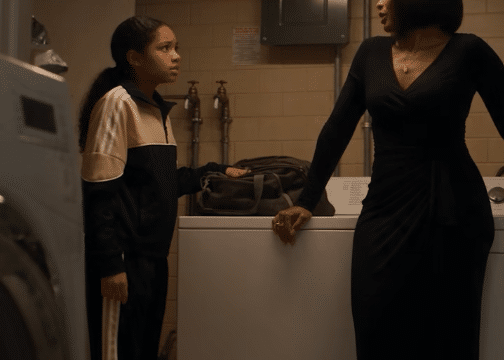
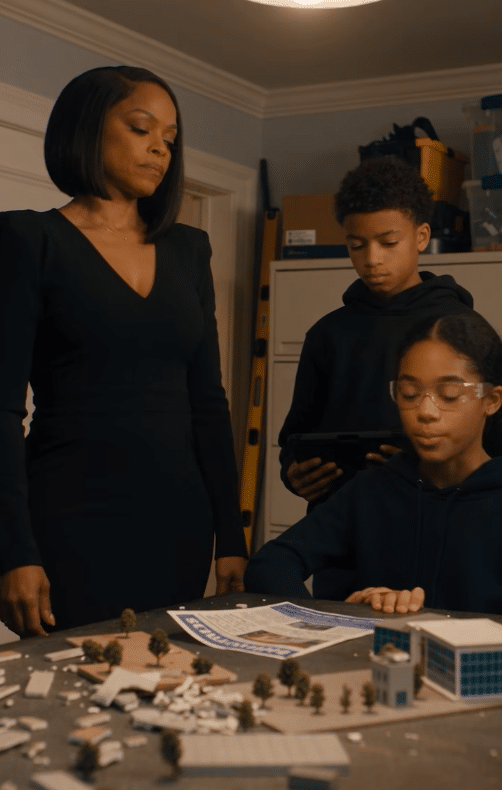
Nia stood in the garage wearing her safety glasses, staring at the broken pieces of her solar-city science model scattered across the floor. The miniature buildings had separated from their base, the cardboard roads lay twisted, and the little imitation solar panels were scattered across the workbench.
Behind the wreckage, her competition poster still announced the deadline in bold letters.
Her stepmother stood nearby in her black dress, looking down at the damage without a trace of concern.
“Then you built it badly.”
Nia slowly crouched and picked up one of the miniature buildings. She had spent weeks measuring, cutting, gluing, and arranging every piece. The project was supposed to demonstrate how a city could use solar energy to power homes, streetlights, and public spaces.
She had finished it the night before. She remembered checking every connection in the model, straightening the buildings, and stepping back to admire the tiny city she had built almost entirely by herself.
Now it looked as though someone had swept it all away in a single motion.
Nia looked at the competition poster.
“The winner gets a scholarship.”
Her stepmother’s expression did not change.
“You weren’t going to win.”
Nia held the broken piece in her hand, too stunned to answer.
Then the garage door began to open.
Act II
The competition had started as a school assignment, but Nia had turned it into something much bigger.
Her solar city was designed around a simple idea: a neighborhood should not have to choose between affordable energy and a cleaner future. She had drawn the layout herself, researched renewable power, and built miniature homes around a central community center.
Her science teacher had encouraged her to enter the regional competition after seeing the early prototype. The scholarship offered to the winner could help with future educational expenses, and the finalist program included an interview with judges from local universities.
For Nia, the opportunity represented more than a prize.
It was a chance to show that the hours she spent studying after school could lead somewhere. She wanted to build things, solve problems, and create a future that was not limited by the expectations of the adults around her.
Her stepmother had never shared that enthusiasm.
Whenever Nia worked on the model, there was another complaint about the mess, the time, or the materials spread across the garage. Her stepmother dismissed the project as a school hobby, something that would soon be forgotten once the next assignment came along.
Nia had tried to ignore the comments. She had learned that explaining why something mattered to her did not always make other people respect it.
But the destruction in the garage was impossible to dismiss.
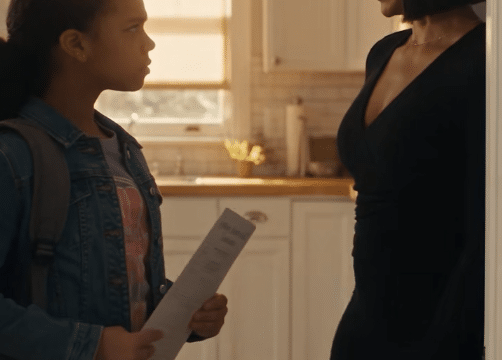
She picked up the competition entry sheet from the workbench. Before she could examine it, her stepmother crumpled it in her hand.
Nia stared at the paper.
The garage door opened fully, and Marcus stepped inside wearing his dark-brown suit. He took in the scattered model pieces, the damaged poster, and his daughter standing beside the workbench.
His expression sharpened.
“Who touched Nia’s project?”
His wife turned toward him, her posture suddenly composed.
“It fell by itself.”
Marcus looked at the wreckage.
Then he looked at Nia.
She had not accused anyone. She had not raised her voice. But the careful way she held the broken model told him this was not an ordinary accident.
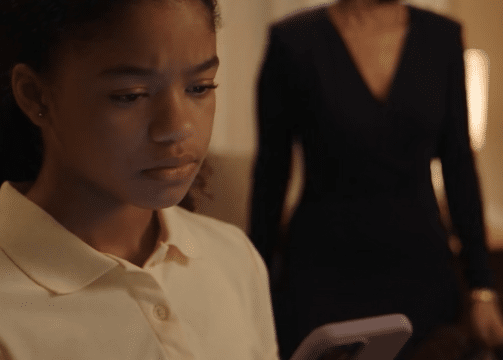
Before he could ask another question, Caleb appeared with a tablet.
Act III
Caleb had been watching the garage camera footage.
At first, he had only wanted to understand what had happened to his sister’s project. He knew how much time Nia had spent building it, and he remembered seeing the completed city on the workbench the night before.
The camera had recorded the garage while everyone else was asleep.
Caleb opened the relevant clip and turned the tablet toward his father.
The footage showed his mother entering the garage. She paused, looked around, and approached the workbench where Nia’s model sat fully assembled.
For a moment, she simply stood there.
Then she swept the model off the bench.
The small city fell apart as it hit the floor.
The footage continued long enough to show her looking toward the doorway before leaving the garage, without attempting to gather the pieces or alert anyone to what had happened.
Marcus watched the clip in silence.
His wife’s earlier explanation hung in the air between them.
“It fell by itself.”
Caleb lifted his eyes from the tablet.
“It didn’t fall.”
Nia looked at the screen again. Seeing the destruction happen in real time was different from discovering the wreckage that morning. The scattered pieces had left her wondering whether she had made a mistake, whether the model had been unstable, whether she had rushed the final assembly.
The footage answered those questions.
She had finished the project.
Someone had deliberately destroyed it.
Marcus lowered the tablet slowly. His wife looked away, her polished expression tightening as the room became impossible to control with a dismissive remark.
But Ava, who had been standing near the garage entrance, was holding something else.
A cream-colored envelope.
She stepped forward, glancing at Nia before placing it in her father’s hand.
“Mom hid this too.”
Act IV
Marcus turned the envelope over.
Inside was a letter from the competition organizers, addressed to Nia. The heading confirmed that she had advanced to the finalist round and had been invited to a scholarship interview.
The letter had been tucked behind a storage cabinet, out of sight.
Marcus read the opening lines, then looked at the date. Nia had already earned a place among the finalists before the model was destroyed.
The scholarship was no longer an abstract possibility she had mentioned in the garage. The interview was real. The invitation was real. Her project had been strong enough to advance.
Her stepmother’s claim that Nia had never been going to win now sounded even more hollow.
Ava watched her father read the letter.
She had found it while searching for the competition materials, which had disappeared from the workbench along with the entry sheet. At first, she had thought it might simply have been misplaced.
Now she understood why it had been hidden.
Nia stood beside the broken model, her safety glasses still on. She looked from the invitation to the pieces of the miniature city, trying to reconcile the two things in front of her: proof that she had succeeded, and the deliberate act that had threatened to take that success away.
Marcus read the words finalist scholarship interview one more time.
Then he lowered the letter.
He did not need to speculate about whether the model had fallen. The camera had shown what happened. He did not need to guess whether Nia had been good enough for the competition. The letter confirmed that she was already a finalist.
The evidence sat in his hands.
His wife shifted her weight, and for the first time, she seemed unable to find a convincing place to direct her gaze.
Marcus turned toward her.
Act V
The garage was quiet except for the faint hum of the overhead light.
Nia looked down at the pieces of her solar city. The miniature buildings had taken weeks to make, and some of the smallest details had required several attempts before she was satisfied.
She had been proud of the finished project.
Now she was standing in the same garage where she had celebrated completing it, surrounded by the remains of something she had built with patience and determination.
But the broken model was no longer the only thing that mattered.
Caleb had shown the footage. Ava had found the hidden invitation. Marcus had seen both, and the facts were no longer dependent on Nia convincing anyone that she had worked hard enough or cared enough.
She had been a finalist before the damage happened.
The letter proved it. The camera proved what had happened afterward.
Her stepmother stood near the workbench, no longer dismissing the project as a failed school assignment. The scholarship invitation had exposed the significance of what she had done, while the recording had removed the possibility of pretending it was an accident.
Marcus held the letter in one hand and the tablet in the other.
His eyes moved briefly to the ruined model, then returned to his wife.
His voice was controlled, but the disbelief beneath it was unmistakable.
“You destroyed a finalist’s project on purpose?”
His wife flinched.
Her lips parted, yet no explanation emerged. The woman who had confidently told Nia she would never win now stood confronted by the evidence that Nia had already made it to the final round.
Nia remained beside the workbench, quiet but no longer alone with the truth.
Marcus waited for an answer.
His wife said nothing.
HARD CUT.