Act I
“Shut it down.”
The woman’s voice cut through the noise of the military explosives training range.
Behind her, a bomb-disposal robot sat motionless near a protective concrete barrier. Technicians watched their control monitors while the machine remained positioned dangerously close to a training device that should never have been approached under the current conditions.
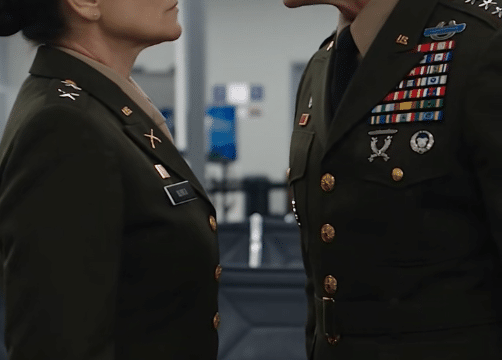
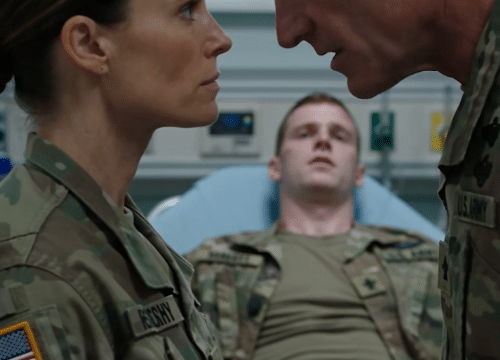
The woman, forty-two, stood beside the control station in an Army OCP combat uniform. Her dark hair was secured neatly, and her expression was calm, almost clinical.
She had noticed something wrong with the operation.
The Brigadier General in charge of the range turned toward her, his one-star insignia clearly visible on his uniform.
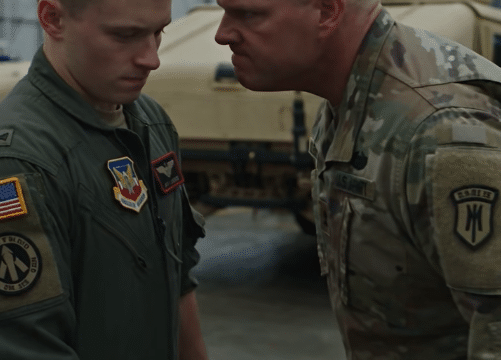
“You don’t run my EOD team.”
She didn’t argue.
“Shut the operation down before someone gets hurt.”
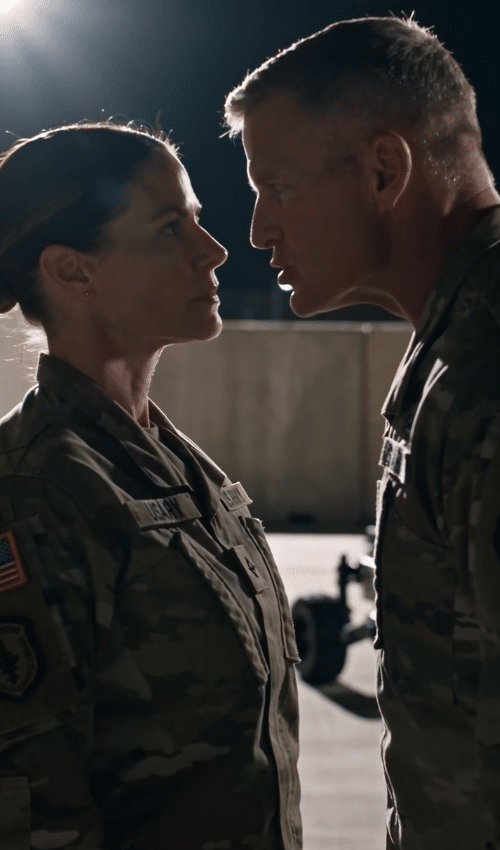
The General stepped closer, his expression hardening.
“Stay out of my range.”
He was fifty years old and accustomed to having the final word. His position gave him command over the facility, and he treated every disagreement as an attempt to undermine his authority.
The woman, however, wasn’t trying to win an argument.
She was trying to prevent a potentially dangerous operation from continuing.
The technicians exchanged uneasy looks. One operator glanced at the console, then back at the General.
Nobody wanted to contradict him.
And that silence gave him the confidence to do something he would soon regret.
Act II
The first blow came suddenly.
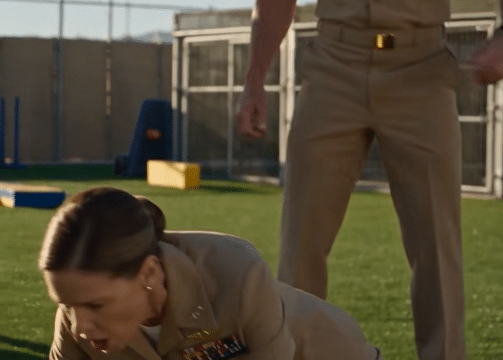
The General struck her across the face with an open hand. Her head snapped sideways, and she staggered against the edge of the protective barrier.
A technician instinctively stepped forward before stopping himself.
The General wasn’t finished.
He drove a boot into her torso, knocking her onto the ground beside the barrier. She struggled to catch her breath, one arm instinctively moving toward her abdomen.
As she tried to recover, he delivered another hard kick into her side.
The control room fell silent.
Her cheek was already red and swollen. A faint trace of blood appeared at the corner of her mouth.
The General stood over her, looking down with the satisfaction of someone who believed he had just restored order.
“Stay out of my range.”
The words sounded particularly cruel against the quiet mechanical hum of the equipment.
The woman didn’t beg.
She didn’t threaten him.
She simply looked up at him, breathing carefully through the pain.
For years, she had learned that authority meant taking responsibility for the people and equipment under your command. It meant knowing when to stop, even when everyone else wanted to continue.
The General had learned something entirely different.
He believed authority meant never being questioned.
One of the technicians slowly turned toward the control console. His eyes moved across the display, then stopped.
Something had changed.
A new authorization request was appearing in the command system.
He leaned closer.
Then his expression changed completely.
Because the woman on the ground had not been asking the General for permission.
She had been issuing an order.
And the system was about to prove it.
Act III
The woman slowly pushed herself upright.
Her movements were controlled, although the pain in her ribs was obvious. She glanced toward the control station, where the robot operator was staring at his monitor.
The General noticed the technician’s hesitation.
“What are you looking at?”
The operator didn’t answer immediately.
He had just received an authorization update through the facility’s military command network. It wasn’t an ordinary operational notification or a routine change in training permissions.
It was a command-level override.
The EOD facility had been operating under a layered authorization system designed to prevent local commanders from continuing operations against higher-level safety directives.
The General had administrative control over the range.
But administrative control wasn’t the same as ultimate authority.
The woman standing before him was a Major General, a two-star Army officer with direct command override authority over the EOD program.
Her visit had been deliberately kept quiet.
She had been reviewing operational standards, equipment readiness, safety compliance, and the conduct of personnel across several military explosives-disposal facilities.
She had wanted to observe how the team actually operated without the influence of a formal inspection announcement.
What she found was worse than a technical violation.
She found a commander who believed that his rank placed him above the rules.
The General still didn’t understand.
He looked at her uniform, apparently searching for some explanation that would allow him to dismiss what he was seeing.
Then the operator straightened in his chair.
His hand hovered over the console.
The authorization had been verified.
And there was no longer any ambiguity about whose command the system recognized.
Act IV
The operator looked directly at the woman.
His voice was clear.
“Command override accepted, ma’am.”
Everything stopped.
The bomb-disposal robot ceased its operation. The technicians immediately halted their movements, and the entire EOD team turned away from their equipment toward the injured woman.
The control room had changed in seconds.
The General stared at the console.
Then at the operator.
Then back at the woman.
He had spent years believing that nobody could challenge his control over the range. He had treated the equipment, the technicians, and the operational procedures as extensions of his personal authority.
But the system had just acknowledged someone else.
And every person in the room had witnessed it.
The operator stood from his chair.
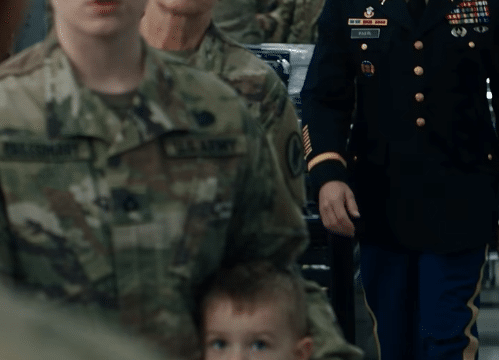
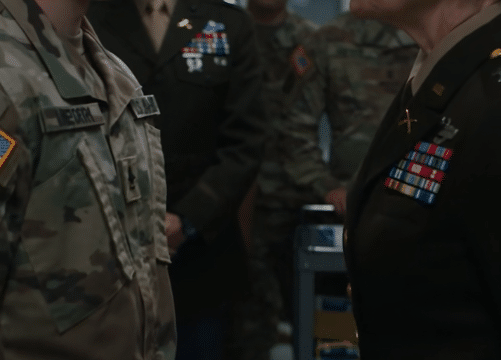
The remaining technicians straightened, their expressions shifting from uncertainty to unmistakable recognition.
The woman slowly rose to her feet.
Her two-star rank patch was now impossible to overlook.
The General’s face began losing color.
He finally understood why she had been so calm when she told him to shut the operation down.
She hadn’t been making a suggestion.
She hadn’t been asking him to reconsider.
She had been exercising an authority that existed above his own.
He looked toward the console again, almost hoping the authorization would disappear.
It didn’t.
The system remained locked under her command.
The woman adjusted her stance, carefully protecting her injured side. Her expression was cold, but her voice remained measured.
The entire EOD team was waiting for her next instruction.
For the first time that afternoon, the Brigadier General had absolutely no control over what happened next.
Act V
The General swallowed.
His one-star insignia was still visible, but it no longer seemed to carry the same weight.
He looked around the room, searching for someone who might offer an explanation or reassure him that this was some kind of technical mistake.
Nobody did.
The operator remained standing.
The technicians maintained their attention on the Major General.
Even the control system had made its decision.
The woman had not needed to announce her rank when she first entered the range. She had not needed an escort, a formal introduction, or a room full of officers to establish her authority.
She had simply identified a dangerous situation and ordered it stopped.
The General had answered with contempt and violence.
Now, the same command network he had relied on to run his facility had recognized the officer he had just assaulted.
There was something particularly devastating about that realization.
He had mistaken her restraint for weakness.
He had mistaken her quiet manner for a lack of authority.
And he had assumed that because she wasn’t wearing a visible entourage, she must answer to him.
The woman stood beside the control station, her injured face revealing the consequences of his decision.
She didn’t need to raise her voice.
The system had already spoken.
The General finally managed to form a question. His eyes moved from the console to her two-star insignia.
“Override… yours?”
His voice was barely recognizable.
The woman held his gaze.
She didn’t answer.
Behind her, the entire EOD team remained at attention.
And for the first time in his career, the Brigadier General understood what it felt like to stand inside a command structure where his own authority was no longer enough.