Act I
The old valet glanced toward the driveway where another vehicle was blocking the exit lane.
He tightened his grip on the key ring and offered a respectful smile.
“Sir, another car is blocking the lane.”
It was a delay of only a few seconds.
To everyone else standing beneath the restaurant’s warm lights, it was nothing.
To the man wearing the tailored black coat, it was an insult.
“Trash. I don’t wait for valets.”
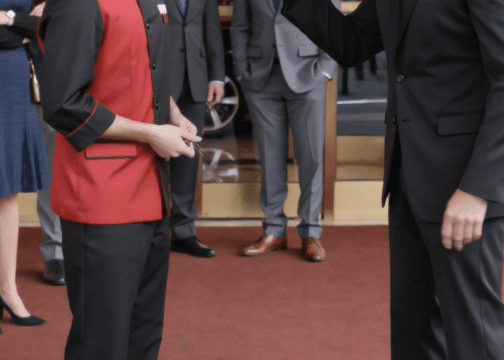
Before anyone understood what he intended to do, the wealthy guest strode across the red carpet toward the elderly employee.
The seventy-three-year-old valet instinctively took half a step backward.
He never got another chance.
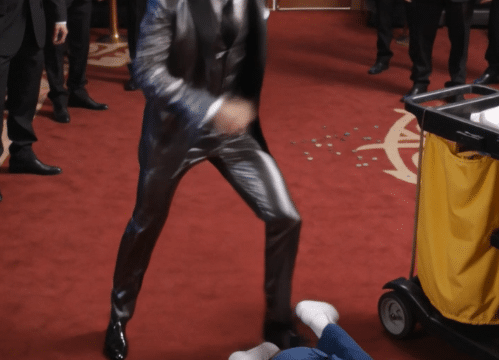
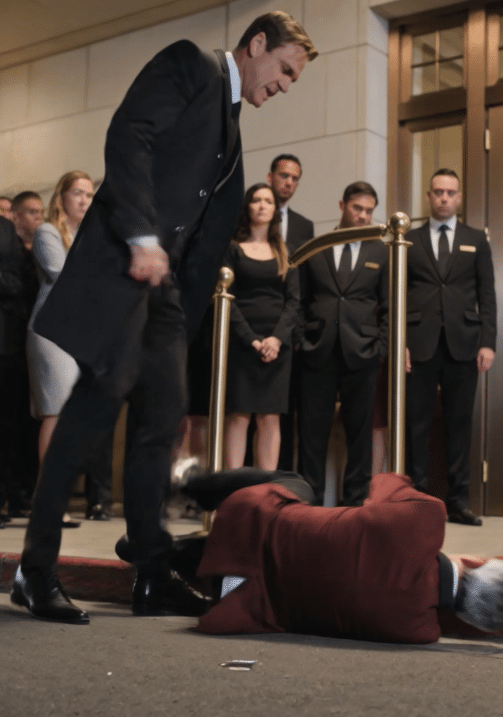
The man lashed out, knocking the elderly worker to the pavement beside the valet podium. The ring of car keys slipped from his white gloves and clattered loudly across the stone entrance, the sound echoing beneath the stunned silence of arriving guests.
The old valet curled slightly, struggling to breathe.
The attacker stood over him, his anger still boiling.
“You made me look stupid.”
No one spoke.
The front entrance remained frozen.
Then the restaurant doors swung open.
And suddenly, every employee standing outside became perfectly still.
Someone important had just arrived.
Act II
Most customers knew the elderly valet only as the quiet gentleman who always opened doors with a smile.
Few knew his real story.
Thirty years earlier, he had walked into the restaurant looking for temporary work after a factory closure left him unemployed in his forties.
Temporary became permanent.
He worked through snowstorms, summer heat, holidays, and countless late nights.
He remembered birthdays of regular customers.
He carried umbrellas through rain.
He once stayed four extra hours helping evacuate guests during a citywide blackout.
When younger employees joined the staff, he quietly taught them the unwritten rule that mattered most.
“Treat every guest like they’re visiting your own home.”
He never demanded recognition.
He believed respect was something you earned, not something you requested.
Even after retirement age, he refused to leave.
Not because he had nowhere else to go.
Because the restaurant had become family.
The owner often joked that the building had changed several times over the decades.
The valet never had.
The wealthy guest waiting impatiently outside had no idea whose loyalty he had just trampled.
And inside the restaurant, someone had witnessed everything.
Act III
The owner emerged through the front doors with the front manager and two members of security.
He didn’t look at the luxury cars.
He didn’t acknowledge the waiting VIP guests.
His eyes went straight to the fallen key ring lying beside the elderly valet.
He bent down, picked it up carefully, and placed it back into the old man’s trembling hands.
Only then did he face the businessman.
His voice remained calm.
“He has served this restaurant for thirty years.”
The sentence landed with unexpected weight.
Around them, servers, hosts, bartenders, and kitchen staff had quietly gathered near the entrance.
Many had tears forming in their eyes.
The businessman frowned.
He had expected the owner to apologize to him.
Instead, the owner was helping the employee he had just humiliated.
The wealthy guest glanced around.
No one appeared impressed by his expensive watch anymore.
Every eye had turned toward the elderly valet.
But there was something the businessman still didn’t know.
The owner’s respect wasn’t based only on loyalty.
It was based on a debt.
Act IV
Years before the restaurant became one of the city’s most exclusive dining destinations, it had nearly failed.
Bills piled up.
Suppliers demanded payment.
Investors walked away.
The young owner considered closing the doors for good.
One evening, after another disappointing night, he sat alone in the parking lot wondering how to tell his family that everything they had built was over.
The elderly valet quietly approached.
Without saying much, he handed over an envelope.
Inside was nearly every dollar he had saved.
“I’ve had thirty good years,” he said.
“Your dream deserves one chance.”
The owner refused.
The valet insisted.
That money helped keep payroll going long enough for a food critic to unexpectedly visit weeks later.
The glowing review transformed the struggling restaurant into one of the busiest destinations in the city.
The owner eventually repaid every cent.
But he never forgot the sacrifice.
From that day forward, he promised himself something.
No employee who stood beside him would ever stand alone.
Looking directly at the businessman, he spoke with controlled certainty.
“There are people whose titles make them important.”
He glanced toward the elderly valet.
“And there are people whose character built everything you see.”
Security quietly stepped between the two men.
The balance of power had completely shifted.
Act V
Medical personnel were called to examine the elderly valet while coworkers surrounded him with genuine concern.
Guests who had witnessed the confrontation voluntarily remained to provide statements.
The owner canceled the VIP reservation without hesitation.
Respect inside his restaurant, he explained, was never reserved for those willing to spend the most money.
It belonged first to those who had spent years building the place.
The elderly valet slowly stood, still shaken but supported by employees who considered him more than a coworker.
Many embraced him.
Some had learned their first day on the job under his guidance.
Others remembered countless quiet acts of kindness he had shown over the years.
The businessman, once so certain of his own importance, now stood alone near the red carpet.
His confidence had disappeared.
He looked from the owner to the elderly valet, unable to understand why everyone had chosen the employee over the wealthy customer.
His voice came out softer than before.
“You’re taking his side?”
The owner didn’t hesitate.
“I don’t take sides.”
He looked at the elderly man adjusting his worn white gloves.
“I stand by the people who stood by this restaurant long before success arrived.”
The entrance returned to life.
Guests continued walking through the doors.
Cars arrived beneath the warm lights.
The elderly valet resumed greeting visitors with the same quiet dignity he had carried for three decades.
And everyone who had witnessed the scene left with the same realization.
Luxury can buy a reservation.
Money can buy the finest table in the house.
But neither can purchase the respect earned through thirty years of loyalty, humility, and unwavering service.