Act I
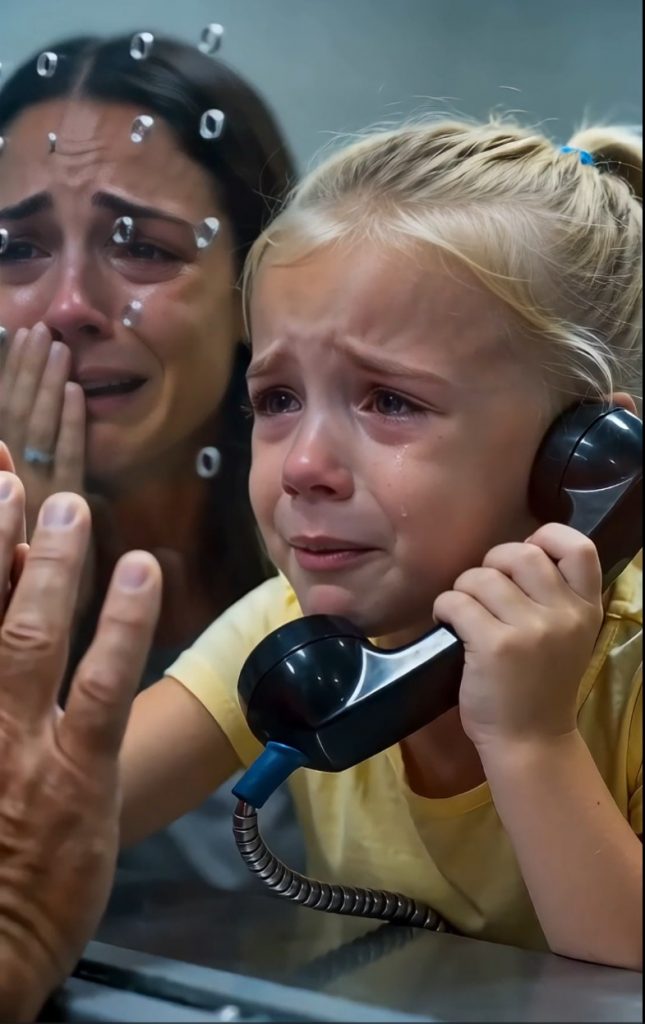
The little girl pressed her palm to the glass like she believed love could pass through it if she tried hard enough.
On the other side, her father did the same.
Their hands lined up almost perfectly.
His was broad, rough, and calloused. Hers was tiny, soft, and shaking. Between them was a thick prison partition with small round holes near the phone, a black corded receiver on each side, and a cold line neither of them could cross.
“Daddy,” she whispered into the phone, “it’s my birthday today.”
Ray Callahan closed his eyes.
He knew.
Of course he knew.
He had counted down to that day for weeks from a narrow bunk in a cell that smelled faintly of bleach and metal. He had written the date on the back of every envelope his wife sent. He had asked the chaplain if he could get a birthday card from the commissary, then traded two weeks of coffee packets for one with a cartoon sun on it.
“I know, baby girl,” he said, voice rough through the receiver. “Daddy didn’t forget.”
Emma sat on the visitors’ side in a yellow dress, white socks, and sneakers with little scuffs on the toes. Her blonde ponytail had come loose at the edges, and her cheeks were wet. She looked too bright for that place, like someone had placed a candle in a room built to reject warmth.
Beside her, Lena Callahan tried not to fall apart.
“She wore your favorite yellow dress just for you,” she said.
Ray looked at his wife through the glass.
Lena’s gray T-shirt was wrinkled from the long bus ride. Her eyes were swollen from pretending she had not cried in the parking lot. She had done Emma’s hair that morning with hands that trembled, packed crackers in her purse, and told their daughter, “Daddy will be so happy to see you.”
Ray was happy.
That was the cruelest part.
He was happy and devastated at the same time.
“I wish I could hug you right now,” he whispered.
Emma leaned closer to the glass.
“Can you sing happy birthday for me, Daddy?”
Ray’s face broke.
He nodded quickly, wiping his eye with the heel of his hand before his daughter could see too much.
“Of course, princess,” he said. “Daddy will sing—”
Behind him, the steel door unlocked.
The sound was loud enough to cut through everything.
A correctional officer stepped in wearing a dark navy uniform, badge catching the fluorescent light. He was tall, broad-shouldered, stern-faced, with a shaved head and a duty belt that shifted as he walked.
“Call’s over,” the officer said. “Stand up.”
Ray turned, still holding the receiver.
“Sir, please,” he said. “Just one minute. It’s my daughter’s birthday.”
The officer’s expression did not change.
“Stand up.”
On the other side of the glass, Emma’s smile vanished.
“No,” she cried, banging one small hand against the partition. “Don’t take my daddy!”
Lena leaned forward, palm flat to the glass.
“Officer, please. She came all this way.”
But rules did not bend because children cried.
The officer took Ray by the arm.
The receiver slipped from Ray’s hand and struck the wall, swinging on its cord. He looked back at Emma as he was led toward the open steel door, his hand lifting helplessly toward the glass.
He did not get to sing.
And Emma’s birthday song died in the space between them.
Act II
Before orange fabric and steel doors, Ray Callahan had been the kind of father who sang too loudly in grocery stores.
He made pancakes in shapes that never looked like what he claimed they were. He danced badly while washing dishes. He carried Emma on his shoulders through the county fair until his back ached and then pretended he was fine because she still wanted to see the lights from higher up.
He called her Sunshine.
The yellow dress had started as a joke.
When Emma was three, she refused to wear anything except a faded yellow sundress with a tiny tear near the hem. Lena tried hiding it once so she could wash it. Emma found it in the laundry basket and cried like she had been betrayed by the entire adult world.
Ray picked her up, held her in front of the mirror, and said, “That’s because sunshine knows sunshine.”
After that, yellow became their color.
Yellow balloons. Yellow birthday cupcakes. Yellow bows. Yellow construction paper cards covered in crooked hearts.
Then came the night everything changed.
Ray worked maintenance at a warehouse outside the city. The pay was bad, the hours were worse, but it kept rent paid and Emma insured. One winter evening, a supervisor ordered him to move a company van with a faulty brake system. Ray refused. The supervisor laughed and said if Ray wanted the job, he would move the van.
So he did.
A few blocks later, the brakes failed.
Ray swerved to avoid a family crossing the lot entrance and crashed into an empty storefront. No one died. No one outside the vehicle was hurt. But the company moved fast. Records disappeared. Maintenance logs changed. The supervisor claimed Ray had stolen the van after arguing over money.
Ray had a record from a mistake when he was nineteen.
That was enough for people to believe the worst version.
His public defender told him a plea deal would get him home sooner than trial. Ray took it because Lena was pregnant at the time and the bills were already choking them. Then Lena lost the baby two weeks before sentencing.
By the time Ray realized the company had buried the truth, he was already in prison.
Lena fought anyway.
She wrote letters. Called lawyers. Contacted reporters who never called back. She found one former mechanic who remembered warning management about the van, but he was afraid to testify. She requested records that came back heavily redacted or conveniently missing.
Ray told her to stop.
“Raise Emma,” he said during one visit. “Don’t spend your whole life trying to pull me out of a hole.”
Lena looked through the glass and said, “You would pull me out.”
That ended the argument.
But the years did damage.
Emma learned prison rules before she learned long division. She learned not to bring stickers because they might be confiscated. She learned that hugs were for before and after visits, not during. She learned that Daddy lived behind glass, and grown-ups used words like sentence, appeal, and misconduct when they thought she was coloring.
Ray tried to keep birthdays sacred.
He mailed drawings from inside. Wrote poems that did not rhyme. Once, he convinced three men from his unit to hum softly in the background while he sang over the prison phone. Emma had laughed so hard she dropped the receiver.
But this year mattered more.
This year, Emma was six.
And Ray had promised her one thing.
“I’ll sing to you in person,” he said during a call in March. “Not on the phone at home. Not through a recording. I’ll sing it looking right at you.”
“You promise?”
Ray pressed his hand to the receiver as if swearing on something holy.
“I promise.”
Now, in the visitation room, the promise had been broken by a steel door and a man in uniform.
But what Emma did not know was that Officer Marcus Reed had heard every word too.
And he had not interrupted because he wanted to.
Act III
Marcus Reed had worked corrections for fourteen years.
Long enough to know that pity could get dangerous if it made you careless. Long enough to know that some inmates used family visits like theater. Long enough to build a face that revealed nothing, even when something inside him moved.
Ray Callahan was not the worst man in that prison.
He was not even close.
He kept his head down. Worked laundry. Broke up two fights before staff reached the block. Helped older inmates fill out grievance forms because he had taught himself legal writing from used books in the library.
But none of that changed the clock.
The visitation shift was over.
A lockdown count was starting.
Marcus had orders.
So he opened the steel door and said, “Call’s over.”
He did not look at the little girl longer than necessary.
That was the only way to do the job sometimes.
But when her small voice cracked through the phone line, begging him not to take her father, something in Marcus’s chest tightened.
He had a daughter once.
Her name was Nia.
She would have been seventeen that year.
He did not let himself think of her at work. Thinking made the uniform heavier. Thinking made every crying child dangerous to his composure.
Still, as he guided Ray toward the door, Marcus heard the man whisper one thing under his breath.
“I’m sorry, Sunshine.”
Not to the officer.
Not to himself.
To the child behind the glass.
Marcus returned Ray to the unit, completed the count, signed the movement log, and tried to put the moment away.
He failed.
That night, he found the birthday card during a routine property check.
It sat on Ray’s bunk, unfinished.
A cheap card with a cartoon sun on the front. Inside, in blocky handwriting, Ray had written:
To my Sunshine,
Daddy was going to sing today. I’m sorry the world keeps cutting the song short. One day I’ll finish it where you can hear me without glass.
Marcus stood there longer than he should have.
Ray saw him holding it.
For a moment, the inmate and the officer stared at each other across the narrow cell.
“Is it against the rules?” Ray asked quietly.
Marcus looked back down at the card.
“No.”
“Then please don’t take it.”
Marcus placed it on the bunk.
“I won’t.”
Ray nodded once.
That should have been the end of it.
But the next morning, Marcus passed the mailroom and heard Lena Callahan’s name.
A clerk was sorting legal envelopes, muttering about returned correspondence. One packet had been marked undeliverable twice. Another was stamped with a court date.
Marcus should have kept walking.
Instead, he stopped.
The name on the envelope belonged to Ray’s case.
Callahan v. State.
New evidence hearing.
Marcus looked at the date.
It had been scheduled for that same week.
The same week Emma wore the yellow dress.
The same week Ray had tried to sing through glass.
A folded document slipped halfway from the packet. Marcus saw enough before the clerk tucked it back in.
Warehouse maintenance logs recovered.
Supervisor statement recanted.
Conviction review requested.
Marcus felt the air shift around him.
Ray Callahan might not belong behind that glass at all.
And suddenly the birthday song was not just a heartbreak.
It was a warning.
The institution had already taken years from that family.
Now it had taken one more minute.
Marcus made a decision that could cost him.
He picked up the phone and called the prison chaplain.
Act IV
The chapel inside the prison was small, beige, and almost always too cold.
It had stackable chairs, a scratched piano, and a stained-glass sticker on the window because real stained glass was apparently too hopeful for the budget. On Sundays, men who rarely cried anywhere else sometimes sat there with their heads bowed and their hands folded like boys.
Marcus found Chaplain Ellis in the supply room.
“I need a favor,” he said.
The chaplain looked up from a box of donated paperbacks. “That sentence usually means trouble.”
“It’s for Callahan.”
“What kind of trouble?”
Marcus handed him the birthday card.
The chaplain read it.
His face softened.
“His daughter?”
“Six.”
The chaplain sighed. “What do you want?”
“A recorded message. Within policy. Chaplain-supervised. No private contact. No special visit. Just him singing the song he was stopped from finishing.”
The chaplain studied him. “You stopped it.”
Marcus’s jaw tightened.
“I enforced the schedule.”
“That is not the same as peace.”
“No,” Marcus said. “It isn’t.”
The chaplain nodded slowly. “Bring him after lunch.”
Ray did not trust it at first.
When Marcus came to his unit and told him to stand for chapel movement, Ray’s face went guarded.
“Did I do something?”
“No.”
“Then what is this?”
Marcus looked at him.
“You still want to sing?”
Ray stopped.
For a second, he did not understand.
Then his eyes filled so quickly he turned his face away.
The recording took less than two minutes.
Ray sat at the piano, though he could not play. The chaplain held a small approved recorder. Marcus stood near the door, arms crossed, trying to look like procedure instead of mercy.
Ray cleared his throat twice.
Then he sang.
His voice was rough. It cracked on the second line. He had to stop once and start again because he almost broke down on Emma’s name.
But he finished.
Afterward, he pressed both hands over his face.
“Thank you,” he whispered.
Marcus nodded once. “It’s going out through the chaplain’s office. Your wife should get it tomorrow.”
Ray looked up.
“I heard there’s a hearing,” Marcus said.
Ray froze.
The chaplain looked between them.
Marcus kept his voice low. “I don’t know details. But I saw enough to know you should make sure your attorney has every record. Mailroom had returns. I’ll document the delay.”
Ray’s face changed.
Hope did not arrive all at once.
It came like someone opening a door in another room.
“They found the logs?” Ray asked.
Marcus said nothing.
He did not need to.
Ray closed his eyes.
That evening, Marcus filed an incident note about delayed legal mail. It was dry, precise, and impossible to accuse of sentiment. He copied the appropriate supervisor. Then he copied internal affairs.
People did not like that.
The next morning, a lieutenant pulled him aside.
“You trying to make trouble?”
Marcus looked at him steadily.
“I’m trying to make a record.”
“Same thing, sometimes.”
“Yes,” Marcus said. “Sometimes.”
The hearing went forward three days later.
The recovered warehouse logs proved the van had been flagged unsafe before Ray ever touched it. A former supervisor admitted under oath that company leadership pressured him to blame Ray. The old plea came under review. The judge ordered an expedited resentencing and release pending final proceedings.
Legal language moved slowly.
But the result did not.
Ray Callahan was going home.
Not fully cleared yet.
Not magically healed.
But home.
When Marcus received the transport order, he looked at the name for a long time.
Then he went to Ray’s unit himself.
“Callahan,” he said.
Ray stood.
Marcus held the paper out.
For once, the sternness left his face.
“You have somewhere to be.”
Act V
Emma received the recording before she received the news.
Lena played it on her phone at the kitchen table, both of them sitting beneath a paper banner Emma had drawn herself with yellow crayons.
Ray’s voice came through the tiny speaker, rough and trembling.
Happy birthday to you…
Emma went completely still.
Her eyes filled, but she did not cry at first. She listened with both hands around the phone, as if holding it carefully enough might make her father appear.
When he reached her name, his voice broke.
Happy birthday, dear Sunshine…
Lena covered her mouth.
Emma leaned closer.
By the time the song ended, the little girl was crying quietly.
“He finished it,” she whispered.
Lena nodded, unable to speak.
Then the phone rang.
A lawyer.
A sentence Lena did not understand the first time.
Release pending review.
She dropped into a chair so hard it scraped the floor.
Emma stared at her. “Mommy?”
Lena put the phone on speaker.
The lawyer repeated it.
Ray was coming home.
Emma blinked.
“Today?”
Lena sobbed once.
“Yes, baby. Today.”
The prison release area was nothing like the reunion scenes people imagine.
There were no violins. No golden light. No slow-motion running across a field.
There was a gray exit door, paperwork, a plastic bag of property, and a man in borrowed clothes stepping into the afternoon like he was afraid the sky might be taken back if he looked up too quickly.
Ray saw Lena first.
Then Emma.
She was wearing the yellow dress again.
For one second, nobody moved.
Then Emma ran.
Ray dropped to his knees before she reached him, arms opening, face crumpling completely. She crashed into him with a sob, and he held her so tightly Lena nearly told him to be careful, then realized he already was.
He was holding her like glass.
Like sunlight.
Like every missed birthday had weight and he was trying to carry all of it at once.
“I’m sorry,” Ray whispered into her hair. “I’m so sorry.”
Emma pulled back, angry through tears.
“You didn’t finish at the prison.”
Ray laughed and cried at the same time.
“I know.”
“You have to do it again.”
“Right now?”
She nodded seriously.
Lena wiped her face.
Ray looked embarrassed for half a second.
Then he sang.
There, outside a prison release door, with guards pretending not to watch and Lena crying into one hand, Ray Callahan sang happy birthday to his daughter in full.
No receiver.
No static.
No glass.
Emma placed both hands on his cheeks when he finished.
“That was better,” she said.
Ray smiled through tears. “Yeah?”
“Because I could feel it.”
Across the lot, Marcus Reed stood near the entrance, arms folded.
He had not meant to watch.
But he did.
Ray noticed him.
For a moment, the two men simply looked at each other. The officer who had taken him from the glass. The officer who had later made sure the song found its way home.
Ray rose with Emma in his arms and walked over.
Lena followed.
Ray held out his hand.
Marcus looked at it, then took it.
“Thank you,” Ray said.
Marcus kept his voice low. “I didn’t do much.”
Lena’s eyes sharpened.
“You did enough.”
Marcus looked at Emma.
She studied him carefully.
“You were the man who made Daddy leave,” she said.
Marcus absorbed that without flinching.
“Yes,” he said. “I was.”
Emma tilted her head.
“But you sent the song.”
“Yes.”
She considered this with the grave fairness of a six-year-old.
“Then you can come to my next birthday,” she decided. “But don’t interrupt.”
For the first time, Marcus Reed smiled.
“I won’t.”
The review continued for months, but Ray stayed home while it unfolded. Eventually, his conviction was vacated. The warehouse company settled quietly after the recovered logs became impossible to bury. Lena used part of the money to move them out of the apartment where every wall remembered waiting.
Ray took time to learn ordinary life again.
He startled at doors closing. He woke before dawn. He cried the first time he packed Emma’s school lunch because he had never done it before and did not know how much fruit was too much.
Emma helped him.
She explained her cereal rules. Her bedtime rules. Which stuffed animals could sit on the bed and which had been “banished for crimes.” She made him attend a tea party where he was assigned the role of royal pancake chef.
Ray accepted the sentence.
On Emma’s seventh birthday, there was a cake with yellow frosting.
Lena hung paper suns from the ceiling. Ray burned the first batch of pancakes and blamed the pan. Emma wore a new yellow dress, then spilled juice on it before noon and announced it had “more personality now.”
Near the end of the party, the doorbell rang.
Marcus stood on the porch holding a wrapped gift and looking deeply uncomfortable in civilian clothes.
Emma opened the door herself.
“You came,” she said.
“You invited me.”
She narrowed her eyes. “Are you going to interrupt the song?”
“No, ma’am.”
She let him in.
When everyone gathered around the cake, Ray stood behind Emma with his hands on her shoulders. Lena lit the candles. Marcus stayed near the doorway, quiet, respectful, almost hidden.
Then Ray began to sing.
This time, no one stopped him.
Lena joined in.
Then the guests.
Then Marcus, softly at first, then louder when Emma turned and pointed at him like a conductor.
The song filled the room.
Not perfectly. Not beautifully.
But freely.
Ray looked down at his daughter and understood that some years could never be returned. Some damage could never be sung away. Glass leaves marks even after it is gone.
But Emma leaned back against him, warm and real and laughing at the candles, and for one blessed moment, the past did not get the loudest voice.
At the prison, her small hand had pressed against his through a barrier built to keep them apart.
At home, she reached back without looking, and his hand was there.
No phone.
No steel door.
No officer waiting behind him.
Just a father, a daughter, and a birthday song finally allowed to end.