Act I
The aircraft was ready to fly.
That was what the Captain kept telling everyone.
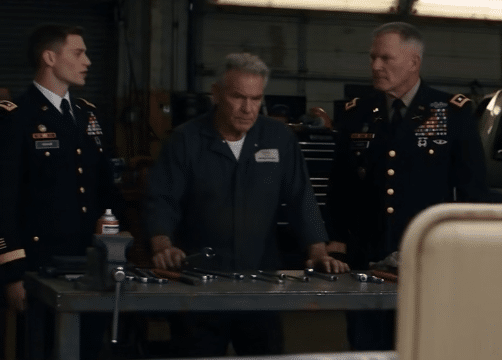
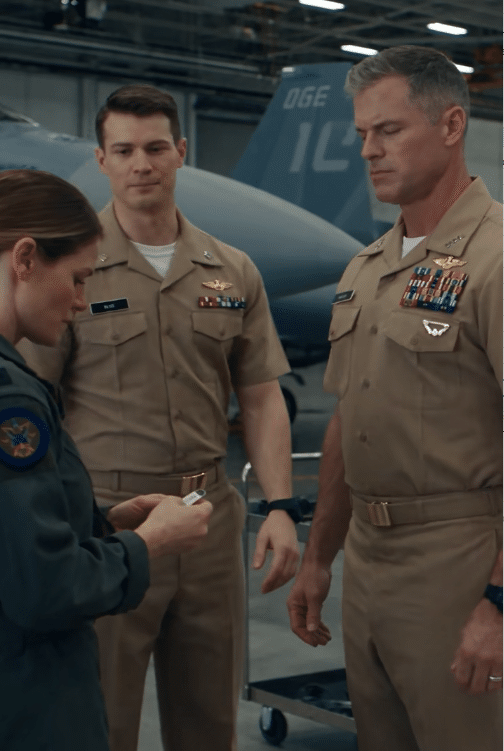
Under the brutal white lights of the hangar, ground crews moved around the fighter with practiced urgency. Tool carts rolled across the concrete, maintenance panels stood open, and the distant whine of turbines filled the enormous space.
Only one person was stopping the launch.
A woman in a navy-blue maintenance coverall stood beneath the aircraft’s wing, holding a broken inspection seal.
She didn’t look worried.
She looked certain.
The Captain pointed toward her.
“Colonel, she’s holding the aircraft again.”
The Air Wing Colonel turned.
He was already irritated.
A high-profile demonstration was scheduled. The aircraft had to leave on time, and he had no patience for another delay from someone he considered a maintenance worker.
The woman raised the damaged seal.
“This seal was broken before inspection.”
The Colonel stared at her.
“Then replace it.”
“I can’t.”
“Why?”
“Because I don’t know who opened it.”
The Captain rolled his eyes.
“She always finds something.”
The Colonel stepped forward.
“Do you understand what you’re delaying?”
“Yes.”
“And you still intend to ground the aircraft?”
“Until the seal is accounted for.”
That answer was enough.
The Colonel snatched the inspection tag from her hand and threw it onto the hangar floor.
She immediately bent to retrieve it.
As she rose, he stepped back and drove a forceful kick into her midsection.
She dropped beside the tool cabinet, the impact knocking the breath from her.
Metal tools rattled behind her.
A few crew members gasped.
The Colonel stood over her.
“Garage girls don’t ground my aircraft.”
She pressed one hand against the floor.
The other remained closed around the broken seal.
She took one controlled breath.
Then another.
And slowly stood.
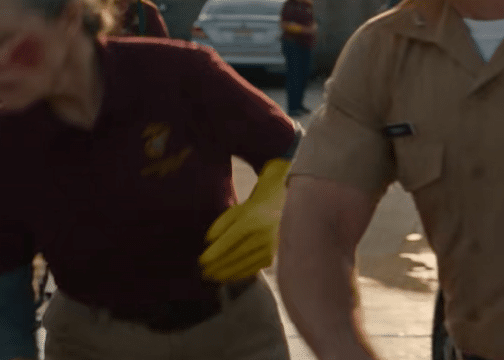
Her glove had slipped loose during the fall.
It dropped onto the concrete.
The cuff of her coverall shifted.
Something small appeared on the inside of her wrist.
The Senior Chief saw it.
His face went completely white.
Act II
The tattoo was tiny.
So small that the Captain didn’t notice it.
The Colonel barely glanced at it.
But the Senior Chief knew exactly what he was looking at.
He had spent decades around military aviation.
He had worked beneath aircraft in freezing rain, beside runways during emergency launches, and inside hangars where a single overlooked marking could mean the difference between routine maintenance and a serious investigation.
He lowered his scanner.
His eyes stayed on the woman’s wrist.
The mark wasn’t decorative.
It was a pilot code.
And something about that particular code frightened him.
“Colonel… maybe don’t do that again.”
The Colonel turned toward him.
His expression darkened.
“Excuse me?”
The Senior Chief said nothing.
The Colonel looked down at the tattoo.
Then laughed.
“A tattoo doesn’t outrank me.”
The Captain smiled again, relieved to see his commander dismiss the warning.
But the Senior Chief didn’t smile.
He had seen the code years ago.
Not on a maintenance worker.
Not on someone who stood beneath an aircraft holding inspection paperwork.
It belonged to someone whose authority had once been recognized far above the hangar floor.
Someone who had flown when others were still arguing about whether the mission should happen.
Someone whose identity had been kept out of ordinary conversation.
The woman noticed the Senior Chief staring.
She didn’t explain.
Instead, she pulled the glove back toward herself.
Then she looked at the broken seal.
That was all.
The Colonel mistook her silence for submission.
“You’re done.”
She looked at him.
“No.”
The answer was almost soft.
He stepped closer.
“What did you say?”
“I said the aircraft stays grounded.”
The Captain shook his head.
“She’s trying to make a name for herself.”
The woman ignored him.
She checked the seal again.
Then the aircraft.
Her attention never left the safety issue.
The Senior Chief watched her with growing unease.
Because he was beginning to remember something.
And he was beginning to wonder whether the Colonel understood what kind of person he had just attacked.
Act III
The Colonel pointed toward the hangar doors.
“Get out.”
The woman didn’t move.
“I have an inspection to finish.”
“You lost that authority when you put my aircraft on hold.”
She looked down at the damaged seal.
“No. I documented the problem before anyone could alter it.”
The Colonel’s face tightened.
That sentence changed everything.
Because she wasn’t merely objecting.
She was preserving evidence.
The Captain stopped talking.
The Senior Chief stared at the woman’s wrist again.
The Colonel noticed.
“You keep looking at that mark.”
The Senior Chief hesitated.
“I’ve seen it before.”
“Where?”
The older man didn’t answer.
The Colonel’s voice became sharper.
“Where?”
Still nothing.
The woman finally spoke.
“He does. He remembers where I got it.”
The Colonel looked at her.
“Who does?”
She nodded slightly toward the Senior Chief.
The older man’s expression tightened.
The Colonel turned toward him.
“You know her?”
The Senior Chief didn’t answer.
That silence was enough to make the Colonel angry.
He had expected the woman to defend herself.
Instead, she had made him ask questions.
Questions he didn’t want to ask.
The Senior Chief lowered his scanner completely.
His eyes remained fixed on the woman.
A memory was taking shape.
Years earlier, there had been a flight operation that almost disappeared from the official conversation.
A pilot code associated with it.
A young aviator who had refused to clear an aircraft when the paperwork didn’t match the machine.
A commander who had argued that the schedule mattered more than another inspection.
And a scar that had been earned during the aftermath.
The Senior Chief remembered the code.
He remembered the person attached to it.
But he wasn’t ready to say the name.
Not here.
Not in front of the Colonel.
The woman knew he remembered.
She didn’t force him to speak.
She simply turned back toward the aircraft.
The Colonel watched her.
The anger in his face was beginning to compete with something else.
Uncertainty.
Act IV
The hangar had become strangely quiet.
The fighter remained motionless.
The inspection seal sat on the tool cabinet.
The woman’s glove lay on the floor.
And her wrist remained uncovered.
The Colonel looked at the code again.
“Who assigned that?”
She didn’t answer.
He stepped closer.
“I asked you a question.”
She met his eyes.
“No. You asked the wrong one.”
The Colonel’s jaw tightened.
The Senior Chief looked away.
He knew where this was going.
The Colonel didn’t.
Not yet.
The Captain moved beside him.
“Sir, it’s just a code.”
The Senior Chief immediately looked at him.
“Don’t.”
One word.
The Captain fell silent.
The Colonel noticed.
His confidence was disappearing in small pieces.
He looked at the woman’s uniform.
No rank.
No insignia.
Nothing explaining why a maintenance worker would carry a pilot code that had caused a veteran Senior Chief to become visibly afraid.
The woman picked up her glove.
She pulled it over her hand.
But before covering the wrist, she looked at the Colonel.
“The aircraft stays grounded.”
“You think you can order me around?”
“No.”
She paused.
“The inspection does.”
The Colonel stared at her.
He wanted to intimidate her.
But something had changed.
He had kicked her down.
She had gotten back up.
He had mocked her.
She had continued working.
He had tried to reduce her to a maintenance worker.
And the oldest aviation professional in the hangar was now treating her wrist like a warning sign.
The Colonel looked at the Senior Chief.
The older man wouldn’t meet his eyes.
That frightened him more than any argument could have.
The Colonel’s mind searched through old flight records.
Old operations.
Old command structures.
Old names.
The pilot code kept pulling at something buried in his memory.
He still couldn’t place it.
But the Senior Chief could.
And the woman’s calmness suggested she knew exactly when he would finally remember.
The Colonel looked at her wrist again.
His arrogance began to crack.
Act V
Nobody touched the aircraft.
Nobody moved the inspection seal.
Nobody spoke above a murmur.
The Captain had lost his earlier confidence.
The Senior Chief stood perfectly still, his scanner hanging at his side.
And the woman remained beside the tool cabinet, one hand resting lightly over the glove that now covered the old code.
Her breathing was controlled.
Her abdomen still hurt.
But the pain hadn’t changed what mattered.
The aircraft was unsafe.
The evidence was intact.
And she had never needed to announce who she was.
The Colonel stared at her.
Then at the Senior Chief.
“Tell me.”
The Senior Chief remained silent.
“Tell me what that code means.”
Nothing.
The Colonel looked back at the woman’s wrist.
A strange memory surfaced.
A flight line.
A prelaunch inspection.
A woman standing in front of an aircraft that everyone else wanted airborne.
A decision that had angered senior command.
Then an accident.
Then a report.
Then silence.
The memory was incomplete.
But the feeling was unmistakable.
Respect.
Fear.
Authority.
The Colonel’s expression changed.
He suddenly understood why the Senior Chief had gone pale.
Why the Captain had stopped smiling.
Why the woman hadn’t reacted like a frightened technician after being attacked.
She had never behaved like someone whose authority depended on the uniform she was wearing.
The Colonel looked at her.
For one brief moment, he seemed ready to demand her identity.
Then he stopped.
Because he realized the answer might be worse than the question.
The Senior Chief straightened slightly.
Not toward the Colonel.
Toward the woman.
That tiny movement said more than words.
The Colonel saw it.
His face tightened.
His eyes moved from the Senior Chief to the hidden wrist code.
And the meaning finally began to reach him.
The woman said nothing.
The aircraft remained grounded.
The Colonel swallowed.
His voice came out quieter than before.
“Assigned…?”