Act I
The emergency lane was almost completely blocked.
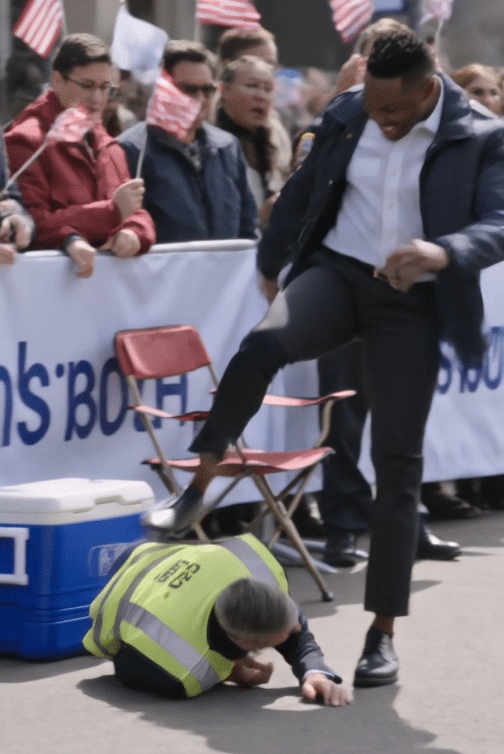
Folding chairs stretched across the marked access route. A large cooler sat squarely beneath a bright sign that read: Emergency Access—Keep Clear.
Crowds along the parade route barely noticed.
One elderly volunteer did.
Wearing a reflective event vest and carrying a small radio that had seen years of public service, the seventy-three-year-old man approached with quiet determination.
He smiled politely before speaking.
“This lane must stay clear for emergencies.”
The wealthy spectator didn’t even glance at the warning sign.
Instead, he turned toward the volunteer with open contempt.
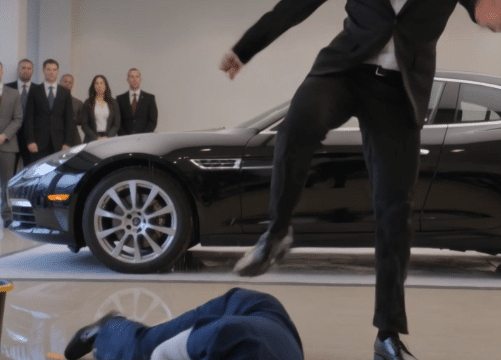
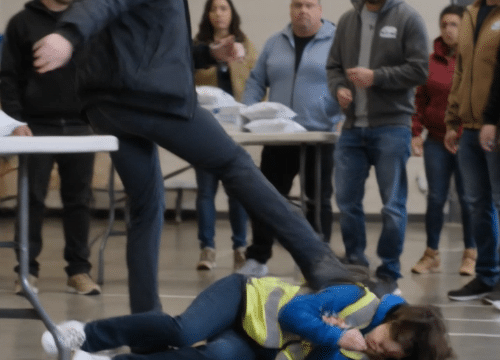
Before anyone could react, he lashed out, knocking the elderly man to the pavement beside the metal barricades.
The volunteer’s radio skidded across the asphalt.
Nearby folding chairs shifted as horrified spectators gasped.
Towering above the fallen man, the bully sneered.
“Trash. You’re not ruining my spot.”
No one realized that someone far more important had just arrived.
Act II
The volunteer wasn’t trying to spoil anyone’s holiday.
For nearly twenty years, he had donated his time to community events like this one.
Rain or sunshine.
Holiday or weekend.
He showed up because someone had to make sure families stayed safe.
Emergency lanes weren’t painted onto the street for decoration.
They existed because ambulances, firefighters, and police sometimes had only seconds to reach someone in danger.
The wealthy man saw none of that.
All he cared about was getting the perfect view.
Money had taught him that rules were suggestions.
If someone objected, he simply became louder.
Leaning over the volunteer, he spat out another insult.
“Move, old man. Nobody cares about your little vest.”
Around them, conversations stopped.
Parents pulled children closer.
Even people who had laughed moments earlier suddenly looked away in discomfort.
Then event security began moving through the crowd with unusual urgency.
Act III
The atmosphere shifted before anyone understood why.
Security officers quickly cleared a straight path through the spectators.
Police officers who had been directing traffic stepped aside without hesitation.
Event coordinators stopped speaking into their radios.
Walking calmly through the opening was a distinguished man in a navy suit beneath a long dark coat.
He didn’t hurry.
He didn’t raise his voice.
He simply observed the scene—the fallen volunteer, the scattered equipment, the blocked emergency lane, and the man still standing over someone old enough to be his father.
Without saying a word, he stepped directly in front of the volunteer.
Security formed a disciplined line behind him.
The cheerful sounds of the parade suddenly felt very far away.
Act IV
The wealthy spectator attempted to recover his confidence.
“This doesn’t concern you,” he muttered.
The man in the navy suit never blinked.
His eyes shifted briefly toward the blocked emergency lane.
Then he looked back at the bully.
His voice was calm enough to make the silence even heavier.
“Clear this lane. Now.”
Immediately, police officers moved.
Event coordinators began removing the chairs and cooler.
Security officers held their positions without waiting for additional instructions.
The bully watched in disbelief.
Every official at the parade was responding to this single man.
Not one questioned his authority.
Not one hesitated.
For the first time all afternoon, the bully realized he no longer controlled anything.
Act V
Concerned spectators hurried to help the elderly volunteer as medical staff arrived to check on him.
Several witnesses quietly described exactly what they had seen.
The volunteer accepted the help with quiet dignity, still more concerned about reopening the emergency lane than about himself.
Within moments, the access route was completely clear again.
Children returned to waving their flags.
Families slowly relaxed.
The parade could finally continue safely.
The wealthy man stood alone.
His expensive clothes and confident posture no longer impressed anyone.
Instead, every eye in the crowd reflected the same disappointment.
He searched for someone to defend him.
No one did.
Security remained behind the man in the navy suit, awaiting only his next instruction.
The bully’s face lost its color.
His breathing became shallow.
His voice, once so loud, barely escaped his lips.
“Who are you…?”
The question lingered in the silence.
But by then, the answer no longer mattered.
Because everyone watching had already learned the lesson that arrogance never understands until it’s too late.
Real authority isn’t measured by wealth, the loudest voice, or the best seat in the crowd.
It’s measured by the quiet resolve to protect others—even when no one is watching.