Act I
“That corner belongs to officers.”
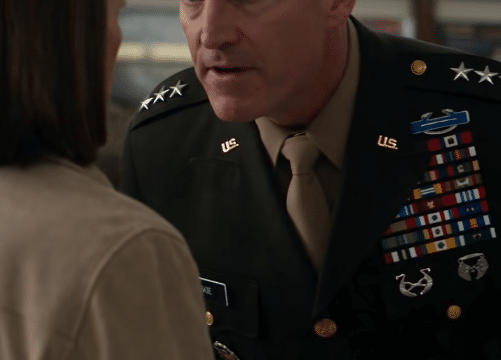
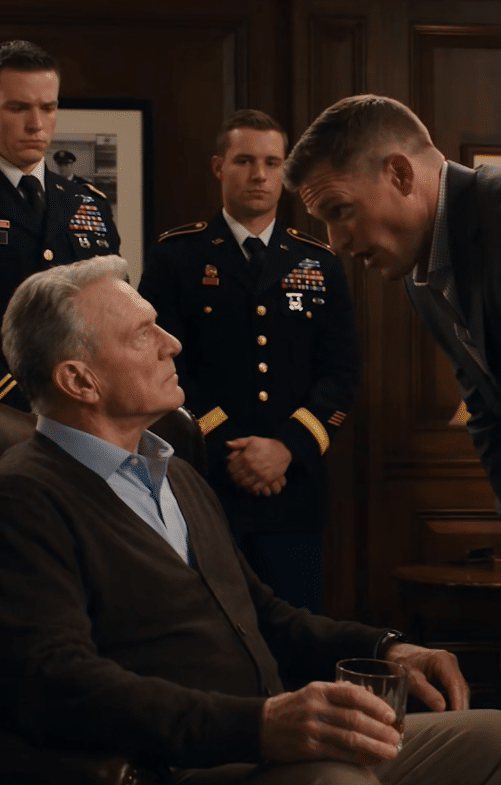
The colonel delivered the words with a polished smile, loud enough for the two younger officers beside him to hear. In a room lined with dark wood, framed unit photographs, and the memories of men who had once commanded armies, he had found someone he believed he could humiliate without consequence.
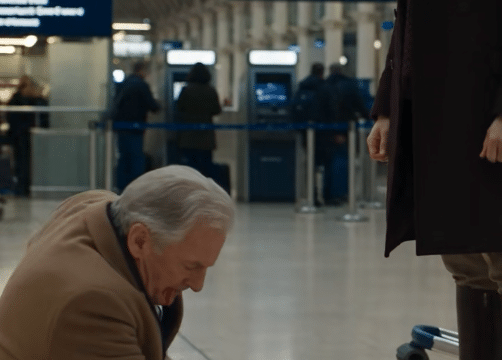
The man in the charcoal cardigan looked up from his whiskey. At sixty-five, with short silver hair and a severe, weathered face, he seemed like an ordinary retiree who had wandered into a room where he no longer belonged.
He didn’t argue. He didn’t raise his voice.
“Then you should recognize one.”
The colonel’s smile disappeared.
For a moment, the two men stared at each other across the armchair. The older man’s calm irritated the colonel more than an insult would have. He was accustomed to people moving aside when he entered a room, accustomed to seeing hesitation in the eyes of anyone who questioned him.
This man offered neither.
The colonel snatched the whiskey from his hand and flung it into his face.
Liquid splashed across the pale-blue shirt. Before anyone could react, the glass struck the floor and shattered, sending fragments skittering beneath the furniture. The colonel drove a hard punch across the older man’s cheek.
The man staggered. His cheek reddened and began to swell, a thin trace of blood appearing at the corner of his mouth. Then the colonel kicked him in the stomach.
The older man folded, lost his breath, and fell beside the armchair.
Around them, conversation died. A retired captain froze with his drink halfway to his lips. Two veterans near the fireplace exchanged horrified looks, but no one moved quickly enough to stop what had happened.
The colonel straightened his jacket as if he had merely corrected an inconvenience.
“Old club trash doesn’t become command by sitting in the right chair.”
The injured man remained on the floor, one hand braced against the carpet, waiting for his breath to return. He did not curse. He did not plead. He simply looked up at the man who had struck him.
That expression should have frightened the colonel.
Instead, he turned away, convinced he had won.
Then a chair scraped across the floor behind him.
An elderly man in a dark green jacket had stopped in the doorway. His silver hair was neatly combed, his shoulders still carrying the disciplined posture of a career soldier. He had been halfway through greeting an old acquaintance when his eyes landed on the injured man.
The warmth vanished from his face.
He stared as if he had seen someone step out of a grave.
“Grim Falcon?”
The nickname moved through the room like a cold draft.
The colonel gave a dismissive laugh. “Sounds like a bad war story.”
The older veteran did not look at him.
“Ask anyone who survived Operation Hollow Ridge why they stopped calling his name over the radio.”
And suddenly, the room was no longer looking at the man on the floor with pity.
It was looking at him with recognition.
The colonel’s smile faltered.
“Hollow Ridge… and he is…?”
No one answered him.
But the silence that followed would cost him far more than a moment of embarrassment.
Act II
The man in the charcoal cardigan had spent the better part of fifteen years learning how to be invisible.
He lived in a modest house outside a military town, drove an aging sedan, bought his groceries early in the morning, and rarely mentioned the decades he had spent in uniform. His neighbors knew him as a quiet widower who kept his lawn trimmed and his porch light working.
They did not know that he had once sat across from generals, testified before senior defense officials, and carried responsibility for thousands of lives.
He had no desire to be recognized. The medals and commendations that once filled a cabinet had been packed into a plain wooden box. His old uniforms were stored in garment bags, untouched for years.
His name was Daniel Mercer.
Long before he became a legend to the soldiers who served under him, Mercer had been a young officer who believed that command meant being responsible for every person whose life depended on his decisions. He was not famous for speeches or grand displays of authority. He was known for remembering the names of enlisted soldiers, reading reports other commanders ignored, and asking one question whenever someone presented him with a plan.
“Who gets left behind?”
That question had followed him through three decades of service.
It had also earned him enemies.
Mercer’s rise through the ranks had been steady, built on difficult assignments and a reputation for remaining calm when circumstances became unbearable. He did not chase publicity. He rarely gave interviews. When victories were announced, he directed attention toward the people who had carried them out.
The soldiers who served beneath him admired him for it.
Some feared him, too. Mercer could be merciless toward carelessness, especially when someone treated a subordinate’s life as an expendable line on a report. He had once halted an operation because a junior officer had concealed a risk to avoid delaying the mission.
The delay had angered powerful people.
It had also saved a platoon.
By the time Mercer retired as a lieutenant general, the nickname “Grim Falcon” had become part of military folklore. It was never an official title. It appeared nowhere on his business cards or formal biographies.
The name had emerged during a campaign in which Mercer repeatedly took responsibility for decisions that other commanders tried to distance themselves from. He had a habit of appearing where the situation was worst, staying until the last person was accounted for, and refusing to leave merely because the situation had become politically inconvenient.
Some said he could see a battlefield unfolding before anyone else understood what was happening.
Others said the nickname came from the expression he wore when he realized someone had put his soldiers in danger for the sake of a promotion.
Mercer never corrected either explanation.
Then came Operation Hollow Ridge.
Afterward, his name became something people spoke about carefully.
Some called it the operation that made him a legend. Others refused to discuss it at all.
The official record described a difficult extraction under hostile conditions, a successful recovery of isolated personnel, and a command decision that prevented a larger loss of life. The report was brief, carefully worded, and missing several details that the people who had been there could never forget.
Mercer had never challenged the public account.
He had never written a book about it, either.
The men who survived knew why.
For years, Mercer had attended the old officers’ club because it was one of the few places where he could sit among veterans without being expected to explain himself. The club’s walls were filled with photographs of men who had aged, retired, or died. Every framed image carried a history that could never be fully captured in a caption.
He liked the quiet.
He liked that nobody asked him to speak at ceremonies or recount the moments when his decisions had changed the course of someone else’s life.
Most of all, he liked being treated as a man instead of a monument.
That afternoon, he had chosen the corner chair because it was close to the window and far from the television. He had ordered one whiskey and intended to finish it before driving home.
Then a colonel with an audience decided the chair was an opportunity to demonstrate authority.
The colonel, Richard Voss, had spent his career mastering the visible parts of leadership. His uniforms were immaculate. His evaluations were polished. He knew how to address senior officers, how to speak confidently in briefings, and how to make a room believe he was the most important person in it.
What he had never mastered was the difference between respect and fear.
To Voss, rank was a weapon that became more useful when other people witnessed it being used. His two junior officers had accompanied him to the club expecting an evening of harmless networking.
Instead, they had watched their superior strike an unarmed older man over a chair.
They had also heard the old veteran say two words that Voss could not get out of his mind.
Grim Falcon.
And the man who had spoken them was not the sort to make careless claims.
Because the retired Command Sergeant Major had not merely recognized Mercer’s face.
He had recognized the man he had once followed into the worst night of his life.
And he knew exactly what Operation Hollow Ridge had cost.
Act III
The old comrade’s name was Thomas Bell.
At seventy, Bell had the deliberate movements of a man whose body remembered decades of marching, carrying equipment, and sleeping wherever duty demanded. He had retired as a command sergeant major, but the habits of his service remained: his eyes moved constantly, his posture straightened when someone entered a room, and his attention sharpened whenever a person under his protection was in danger.
He had served beside Mercer during Hollow Ridge.
He had also been one of the last men to hear Mercer’s voice over the radio that night.
Bell crossed the room without looking at Voss. He lowered himself beside Mercer, careful not to grab him or make his injuries worse.
“Sir,” he said quietly.
Mercer gave him a small, tired look.
“Tom.”
One word. No explanation.
It was enough to make Bell’s jaw tighten.
He had not seen Mercer in almost two years. Their last meeting had been at a memorial service, where they had stood beneath a gray sky and listened to the names of the dead. Mercer had left before the reception, as he always did.
Bell had wanted to ask him whether the nightmares had stopped.
He had wanted to tell him that the men who survived still spoke about him.
Instead, he had shaken his hand and let him go.
Now Mercer was on the carpet with a swollen cheek, his shirt soaked with whiskey, and a colonel standing over him as though the assault had been a legitimate exercise of authority.
Bell rose slowly.
“Who did this?”
Voss lifted his chin. “This is a private club matter.”
Bell looked at the broken glass, the whiskey on the floor, and Mercer’s guarded breathing. Then he turned his eyes toward the two junior officers.
Neither man spoke.
Their silence told Bell enough.
Voss gave a short, impatient laugh. “He was being disrespectful. I corrected him.”
“You struck a retired man who was sitting in a chair.”
“He challenged me.”
“No,” Bell replied. “He answered you.”
The difference was small enough to sound insignificant, but the room understood it. Voss had approached a stranger demanding deference. Mercer had responded with a single sentence. Everything that followed had been Voss’s choice.
The colonel glanced around, looking for someone who would support him.
Instead, he found veterans who had stopped pretending to be occupied with their drinks.
An older man near the fireplace had removed his cap. Another stood with both hands resting on the back of a chair, his face drained of color. A third had turned away from the bar and was staring at Mercer as if trying to reconcile the injured man on the carpet with a memory he had carried for decades.
Voss noticed.
His confidence began to fracture.
“What exactly is Hollow Ridge?” he demanded.
Bell studied him for a moment.
“You served long enough to hear the name.”
“I know the operation.”
“Then you know what happened to the people who were there.”
“I know the official report.”
“That’s not what I said.”
The answer landed harder than a shout.
Voss looked toward Mercer. The older man had managed to sit upright against the armchair. He was still breathing carefully, one hand pressed against his stomach, but his gaze had not changed.
There was no hatred in it.
That unsettled Voss more than anger would have.
“Why did they stop calling your name over the radio?” the colonel asked.
Mercer said nothing.
Bell’s expression hardened. “Because the last time they heard him, he was telling us to leave without him.”
The room went still.
Bell had not intended to reveal that much. He had spent years respecting Mercer’s silence, and he would not turn Hollow Ridge into a story for the entertainment of a man who had just abused an old soldier.
But Voss had asked.
And the truth was already beginning to emerge.
Operation Hollow Ridge had taken place during a mission that deteriorated faster than the planning documents predicted. A small team had been isolated beyond the expected perimeter, and the route designated for their extraction became unusable. Communication was unreliable. The situation changed by the minute.
Mercer had been the senior commander responsible for the operation.
He had two choices: withdraw the remaining force and accept that the isolated team might not survive, or commit resources to a rescue that could trap even more people.
He chose to bring them home.
When the operation became more dangerous, Mercer moved closer to the extraction point instead of remaining safely behind the command line. He coordinated the withdrawal while Bell and the ground team worked to reach the isolated personnel.
Then a final complication cut Mercer off from the others.
The radio carried fragments of his voice. Directions. Corrections. A final instruction to keep moving.
And then silence.
For hours, the people who had escaped could not confirm whether Mercer was alive. The team returned with the missing personnel, but the operation’s final phase remained confused and politically sensitive. A fuller account would expose how badly the original plan had underestimated the danger.
Mercer’s name disappeared from the radio because the team could no longer reach him.
For the survivors, it had become the moment when they believed they had lost the one commander who would never ask them to do something he was unwilling to do himself.
But the official report did not tell the whole story.
And Bell knew the missing truth was not a tale of battlefield heroics.
It was a story of who had tried to bury the cost.
Act IV
The first person to speak was a retired captain sitting near the window.
“I was there,” he said.
His voice was low, almost apologetic, as though he were asking permission to interrupt a conversation that had begun long before he entered the room.
Voss turned toward him.
The captain stood. His hair had thinned, his hands had grown unsteady, and a wedding ring rested loosely on his finger. But when he looked at Mercer, his face held the same solemn gratitude that had been visible in photographs from the years after Hollow Ridge.
“He stayed on the radio until he knew we were moving,” the captain continued. “We were ordered to get out. He made sure every name on that list was accounted for.”
Another veteran rose beside the fireplace.
“He took responsibility for the decision to change the extraction route,” the man said. “The inquiry wanted someone to blame. He could have pointed at the planning staff. He could have named the people who ignored the warnings.”
Bell’s eyes remained on Voss.
“He didn’t.”
The colonel looked from one veteran to another, waiting for someone to contradict them.
No one did.
The old officers were not behaving like fans recalling a famous commander. Their faces carried something heavier than admiration. They were remembering people who had survived, people who had not, and the man who had carried the blame when the official story became more convenient than the truth.
Mercer finally spoke.
“Tom. Enough.”
Bell looked down at him.
For a moment, the old warmth returned to his expression. “You always did say that when people started telling the truth.”
A faint, almost invisible smile crossed Mercer’s face.
Then he winced as he shifted against the chair.
That small movement changed the room again. The story of Hollow Ridge had briefly drawn everyone into the past, but the man who had lived through it was still injured on the floor of a club. Whatever Voss had done could not be made smaller by the significance of the person he had chosen to attack.
Bell turned toward the club manager.
“Call for medical assistance. And preserve the security footage.”
The manager moved immediately.
Voss’s head snapped around. “You can’t be serious.”
“I am.”
“This is being blown out of proportion.”
Bell did not raise his voice. “You threw a drink in his face, broke the glass, punched him, and kicked him while he was down. There is nothing left to exaggerate.”
One of the junior officers stepped forward. He looked pale, but his voice was steady.
“I saw the whole thing, sir.”
Voss stared at him.
The young officer swallowed. “So did Lieutenant Parker. We’ll both give statements.”
His companion nodded, unable to meet Voss’s eyes.
The colonel’s face darkened. “You’d better think carefully about what you’re saying.”
“That’s enough,” Mercer said.
He spoke softly, but the junior officers stopped flinching and looked toward him.
Mercer pushed himself a little straighter. The pain in his face was visible now, but he seemed less concerned with his injuries than with the young men standing across the room.
“Tell the truth,” he said. “Nothing more. Nothing less.”
The younger officers nodded.
It was the first order Mercer had given all afternoon, and neither of them needed to know his rank to understand it.
Voss looked as though he had been slapped.
He had expected the old man to demand revenge, to threaten him with connections, to reveal a powerful title and use it to crush him. That was how Voss understood power: as the ability to make another person afraid of what would happen next.
Mercer offered him none of that.
He would not shout. He would not humiliate Voss in return. He would not even tell the room who he was.
The colonel had wanted to establish dominance in front of two junior officers.
Instead, he had exposed the weakness beneath his own authority.
Then Bell reached into the inside pocket of his jacket and took out an old photograph, its corners softened by years of handling. He did not hold it up for the room. He simply looked at it for a moment before turning it toward Mercer.
The image showed a group of exhausted soldiers standing beside a damaged vehicle after Hollow Ridge. Some were smiling with the strained disbelief of men who had expected not to see another sunrise. Mercer stood among them, younger, leaner, his face streaked with dirt.
He was not posing in front.
He was standing at the edge of the group, one hand resting on the shoulder of a young soldier whose eyes were closed from exhaustion.
Bell had carried the photograph for years.
“That boy made it home,” he said quietly. “He had a daughter the next year. He sent me a picture of her graduation last month.”
Mercer looked at the photograph for a long moment.
“Good,” he whispered.
It was the only answer he gave.
And somehow, that single word did more to silence the room than every story that had come before it.
Voss stared at the photograph. He could no longer pretend that Hollow Ridge was merely an obscure operation or that the nickname belonged to a campfire legend.
He had struck a man whose legacy lived in the lives of people standing within arm’s reach.
But the greatest shock was still waiting.
The club manager returned with a phone in his hand. He had reviewed the initial security recording and contacted the appropriate authorities. The assault had been captured clearly, from the first insult to the kick that sent Mercer to the floor.
There would be no dispute about what happened.
Voss’s gaze shifted toward the door.
For the first time that afternoon, he looked as though he wanted to leave.
Bell stepped aside, leaving the path open.
“Go ahead,” he said. “The footage will still be here.”
Voss stopped.
He understood then that nobody in the room intended to shield him. Not the veterans. Not the manager. Not even the two junior officers whose careers he had once believed he could control with a few words.
And not the man he had attacked.
Mercer slowly rose with Bell’s help. He kept one hand against his stomach until he could stand without bending. Then he straightened his cardigan, brushed a small piece of glass dust from his trouser leg, and looked at Voss.
There was no triumph in his expression.
Only disappointment.
That was when the colonel realized he had not merely assaulted a retired soldier.
He had revealed exactly what kind of officer he had become.
Act V
The consequences began before Mercer left the club.
The manager secured the recording and contacted the authorities responsible for handling the assault. The two junior officers gave their statements separately, each describing what they had seen without embellishment. Several retired patrons volunteered their names as witnesses.
Voss tried to frame the incident as a confrontation that had gotten out of hand.
The footage told a different story.
It showed him initiating the encounter, escalating it when Mercer refused to be intimidated, and continuing the humiliation after the older man had fallen. There was no threat to justify his actions, no attempt by Mercer to strike him, and no moment in which the colonel appeared uncertain about what he was doing.
He had made a choice.
Now he would have to answer for it.
The military investigation that followed was not built around Mercer’s reputation. Bell insisted on that point whenever anyone asked whether the legendary nickname had influenced the proceedings.
“The name explains why people recognized him,” he said. “It doesn’t change what happened.”
The evidence was sufficient without the history of Hollow Ridge. Voss was removed from his duties while the case was reviewed, and the assault became part of a broader examination of his conduct and leadership. His threats toward the junior officers were also documented.
The colonel had spent years cultivating the image of a man destined for higher command.
That image collapsed under the weight of his own behavior.
His career did not end because Mercer was famous. It faltered because he had treated another human being as though rank gave him permission to inflict harm—and because the witnesses refused to lie for him.
Mercer never attended the hearings.
He answered questions when required, provided a factual account, and declined every request to turn the incident into a public statement. When someone suggested that he should explain the significance of Hollow Ridge to protect his legacy, he replied that the men who had survived it did not need him to speak on their behalf.
He had spent years refusing to use his past as a shield.
He was not going to start now.
Several weeks later, Bell visited him at home.
The house was quiet, with sunlight falling across the kitchen table and two cups of coffee waiting beside an unopened envelope. Mercer’s cheek had begun to heal. The swelling had faded, and the small cut at the corner of his mouth was almost gone.
He looked older than Bell remembered.
Not weaker. Just tired in a way that had little to do with the assault.
Bell sat across from him and placed the old photograph on the table.
“I should have told the story years ago,” he said.
Mercer studied the faces in the picture. He remembered the cold, the radio static, the impossible decisions, and the voices that had gone quiet one by one. He remembered the moment he had ordered the others to move without him, knowing that a command was only meaningful if he accepted the cost of giving it.
“You told enough,” Mercer replied.
“No. I told people what happened. I never told them what it cost you.”
Mercer lifted his coffee.
“Tom, the cost was paid a long time ago.”
Bell shook his head. “Not by everyone.”
For a while, neither man spoke.
Then Bell explained that the captain from the club had been in touch. So had the veteran near the fireplace. More men were reaching out, some from across the country, others from places Mercer had not visited in decades. They wanted to know if he would attend a small gathering to mark the anniversary of Hollow Ridge.
No speeches. No press. No ceremony beyond the chance to sit together.
Mercer looked toward the window.
“I don’t want to be introduced.”
“You won’t be.”
“I don’t want anyone telling stories about me.”
Bell allowed himself a faint smile. “That might be harder.”
Mercer shook his head, almost amused.
Then he looked down at the photograph again.
“Will the others be there?”
“The ones who can make it.”
“Then I’ll come.”
The gathering took place in a small veterans’ hall, far from the polished tables and dark wood of the officers’ club. There were no banners announcing a distinguished guest. No one stood at a podium to recite Mercer’s career. The men who arrived carried photographs, folded letters, and memories that had grown heavier with age.
One brought a handwritten note from a soldier who had died years earlier. Another carried a picture of his grandchildren. The captain who had spoken at the club arrived with his daughter, the same child whose graduation photograph he had once sent to Bell.
Mercer spent most of the afternoon listening.
He learned who had moved away, who had become a teacher, who had spent thirty years repairing aircraft, and who had never quite managed to sleep through a storm. They spoke about Hollow Ridge, but they also spoke about ordinary life afterward—the marriages, the missed birthdays, the jobs taken after retirement, the quiet victories no official report would ever record.
At one point, a young woman approached Mercer with a framed photograph.
“My father said you brought his team home,” she told him.
Mercer looked at the picture. He recognized the soldier immediately, though the face was younger than the one he remembered.
“He did the hard part,” Mercer said.
“My father said you stayed behind.”
Mercer was silent for a moment.
“Your father got home,” he finally answered. “That’s what matters.”
The woman nodded, tears shining in her eyes. She thanked him and returned to her family.
Bell had watched from a few steps away. He saw Mercer turn back toward the table, uncomfortable with the attention but unwilling to dismiss the gratitude. The man who had once commanded thousands still seemed most at ease when nobody was asking him to be a legend.
By evening, the gathering had become something quieter than a memorial and more lasting than a ceremony. The survivors were no longer just men who had endured the same operation. They were witnesses to one another’s lives, carrying proof that the people who had made it home had gone on to build something beyond the worst day they remembered.
Before leaving, Bell walked Mercer to his car.
“You know,” he said, “Voss asked someone what the nickname meant.”
Mercer opened the driver’s door.
“What did they tell him?”
Bell smiled without humor. “That the men who called you Grim Falcon never did it because you were the most dangerous man in the room.”
Mercer waited.
“They did it because when everyone else was looking for a way out, you were the one who kept looking for the people still missing.”
For the first time that day, Mercer had no answer.
He looked across the parking lot at the other veterans saying their goodbyes. A few waved. One raised a hand in a small salute, not formal enough to demand a response, but sincere enough that Mercer returned it.
Then he got into his car.
The incident at the officers’ club would remain in the record. Voss would have to live with the consequences of what he had done, and the junior officers who witnessed it would have to decide what kind of leaders they wanted to become.
But the most important part of the story was never the colonel’s downfall.
It was the fact that a man who had spent years avoiding recognition had finally been seen—not because he demanded respect, and not because he used his past to intimidate anyone, but because the people who knew him best refused to let the truth remain buried.
At the club, Voss had believed authority belonged to whoever could force others to move aside.
Mercer had understood something different.
A title could put a man in command. A uniform could give him responsibility. Neither could make him worthy of the people who trusted him.
That evening, Mercer drove home beneath a darkening sky, his old photograph resting safely in Bell’s hands until their next meeting. He did not feel like a legend. He felt like a tired man who had been reminded that some promises lasted far longer than the battles that created them.
And somewhere behind him, in a room lined with photographs of soldiers who had come and gone, the chair in the corner stood empty.
No one claimed it.
Not because it belonged to an officer.
Because, at last, everyone understood that the man who had sat there had never needed the chair to prove who he was.