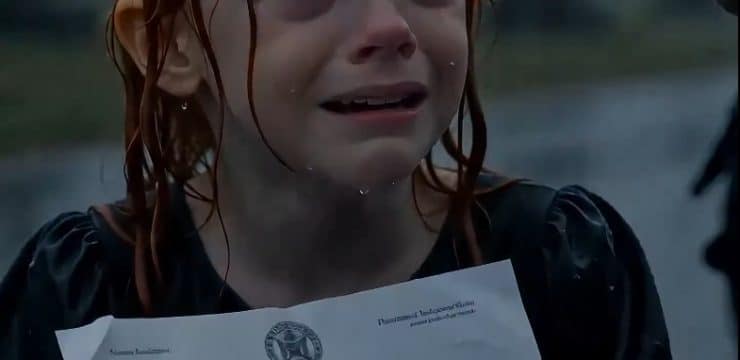
Act I
The two saleswomen started laughing before the old man had even opened his mouth.
It began as a small sound, sharp and breathy, the kind of laugh people use when they want someone else to know they are being judged. Then it grew louder. Crueler. It bounced off the white marble countertop, slid between the gold-edged perfume displays, and drifted across the polished floor of the luxury cosmetics boutique.
The old man stood on the other side of the Lancôme counter with his cap in his hands.
He did not laugh with them.
He only lowered his eyes.
His name was Raymond Hale, though nobody in that store knew it. To them, he was just an interruption in a worn brown work jacket, a faded blue shirt, and a pair of scuffed shoes that had seen too many winters. His beard was patchy with gray. His hands were rough, darkened at the knuckles, the kind of hands that had lifted lumber, fixed engines, cleaned gutters, and carried groceries home when the bus stopped running.
Around him, the boutique glowed like a different world.
Glass bottles stood in perfect rows, catching the warm lights and turning them into little golden flames. Cream jars sat on floating white shelves beneath huge digital screens where flawless models stared into the distance with impossible calm. Every surface looked expensive. Every bottle seemed too delicate for a man like Raymond to touch.
The first saleswoman leaned forward.
Her navy blazer was pressed so sharply it looked like armor. A silver name tag shone on her lapel. Her dark hair had been pulled into a smooth bun, and her smile carried no kindness at all.
“How can you even afford anything here?” she asked.
Then she pointed.
Not at his face.
At his feet.
“Look at your shoes; they look older than you do.”
The second saleswoman covered her mouth, but not fast enough to hide the grin. Her eyes sparkled with the pleasure of someone relieved not to be the target. She nodded along, shoulders bouncing with laughter.
Raymond tightened his grip around the tan baseball cap.
For a moment, he seemed smaller.
Not weak. Not broken. Just tired in that quiet way people become tired when life has forced them to swallow too many insults just to get through the day.
Behind him, shoppers passed with glossy bags hanging from their wrists. A woman testing lipstick glanced over, then quickly looked away. A man in a suit paused near the fragrance wall, saw the old man’s shoes, heard the laughter, and pretended to study a display.
Nobody stepped in.
Raymond lifted his eyes.
They were pale blue, soft at the edges, and filled with something the saleswomen did not expect.
Not anger.
Hurt.
“It’s my daughter’s sixteenth birthday,” he said.
His voice was raspy, quiet, almost swallowed by the mall noise behind him.
The words should have changed the room.
They did not.
The first saleswoman rested her hands on the marble counter, one on top of the other, like a queen preparing to be patient with a servant. The second crossed her arms and tilted her head.
“Sir,” she said, with a tone that pretended to be helpful, “maybe you’d be happier with the prices at a grocery store, not a boutique like this.”
The first saleswoman smiled.
Raymond looked at the perfume bottles, then back at them.
“My daughter likes this brand,” he said.
“Lots of girls like this brand,” the first saleswoman replied. “That doesn’t mean their fathers walk in here looking like they just came from a garage sale.”
The second woman laughed again.
This time, Raymond’s jaw moved slightly, as if he were holding back words he had carried for years.
He looked down at the cap in his hands.
Inside the brim, tucked where nobody could see, was a folded photo.
He touched it once with his thumb.
Then he reached slowly into the inner pocket of his old work jacket.
The saleswomen watched with bored suspicion.
Raymond pulled out a small object and lifted it in his left palm.
“Please,” he said, voice low but clear. “Look at this.”
The laughter stopped.
The first saleswoman’s eyes dropped to his hand.
Her smile vanished.
The second leaned closer.
Then her face went white.
For one terrible second, both women simply stared.
The first saleswoman’s jaw fell open.
The second froze so completely that even the perfume bottles seemed louder than her breathing.
Because the old man had not shown them a coupon.
He had not shown them cash.
He had shown them a photograph they were never supposed to see.
And behind it was the secret that could destroy the most powerful family in that mall.
Act II
Raymond Hale had not stepped inside that boutique by accident.
He had circled it three times before entering.
The first time, he walked past too quickly, pretending to look for the restroom. The second time, he slowed near the entrance, reading the prices in the display case until his stomach tightened. The third time, he stopped beneath the gold lettering, took off his cap, and whispered his daughter’s name.
“Ellie.”
Then he walked in.
For sixteen years, Ellie Hale had been the center of Raymond’s world.
She had arrived in his life on a rainy November morning, wrapped in a hospital blanket too thin for the weather, with a red face and fists so small he was afraid to touch them. Her mother, Claire, had been exhausted and trembling, but she had smiled when Raymond leaned over the crib.
“She has your stubborn little chin,” Claire said.
Raymond had cried before he even realized he was crying.
He had been a mechanic back then, working long days at a repair shop behind a gas station. He smelled like oil and metal most nights. He owned two pairs of jeans, one decent jacket, and a pickup truck that made a coughing sound every time it started.
But when he held Ellie, none of that mattered.
He had something to protect.
For a few years, the Hale family was not rich, but they were happy in the way poor families can be happy when love stretches itself over everything money cannot cover. Claire sang while folding laundry. Raymond fixed neighbors’ cars for extra cash. Ellie learned to walk by gripping the edge of their old brown sofa, laughing every time she fell onto the carpet.
Then Claire got sick.
At first, she hid it.
A missed dinner. A headache. A hand pressed too long against her ribs. By the time Raymond convinced her to see a doctor, their lives had already begun to tilt.
The bills came like weather.
Relentless.
Raymond sold the pickup. Then his father’s tools. Then Claire’s wedding necklace, though he drove three towns over to do it because he could not bear the local jeweler’s pity. Claire apologized every time he came home with another empty box.
“Don’t,” he would tell her. “You’re still here. That’s all I want.”
But she was not still there for long.
Ellie was nine when her mother died.
At the funeral, she wore a black dress a neighbor had bought because Raymond could not afford one. She stood beside her father under a gray sky, holding his hand with both of hers. When the coffin was lowered, Ellie did not cry.
That night, Raymond found her in the bathroom, sitting on the floor with Claire’s old lipstick in her lap.
“It smells like her,” Ellie whispered.
Raymond sat down beside his daughter and held her while she finally broke.
After that, makeup became more than makeup in their house.
Claire had loved beauty counters. Not because she was vain, but because she said colors could change the weather inside a woman. A little lipstick before a hard day. A spritz of perfume before a shift. A jar of cream treated like a luxury even when it came from a clearance bin.
Ellie remembered.
By thirteen, she watched beauty tutorials on Raymond’s cracked phone. By fourteen, she could turn drugstore products into art. At fifteen, she was doing makeup for girls before school dances, refusing payment unless they forced it into her backpack.
But there was one brand she never touched except in magazines.
Lancôme.
Claire had owned one bottle of Lancôme perfume when Ellie was little. It had sat on her dresser like a jewel. After Claire died, Raymond wrapped it in a towel and stored it in a shoebox with her letters, her hospital bracelet, and the lipstick Ellie had held on the bathroom floor.
On the morning of Ellie’s sixteenth birthday, Raymond found her at the kitchen table sketching makeup looks in a notebook.
She had drawn a bottle from memory.
Lancôme.
Raymond stood in the doorway and watched her trace the logo with careful fingers.
“You like that one?” he asked.
Ellie quickly closed the notebook.
“It’s nothing, Dad.”
“Didn’t look like nothing.”
She smiled in that gentle way children learn when they do not want parents to feel poor.
“It’s too expensive.”
Raymond hated those words.
Not because they were untrue.
Because Ellie had learned to say them too early.
So after she left for school, Raymond took the shoebox from the closet. Inside, beneath Claire’s letters, was an envelope marked Ellie 16. Claire had written it years before her hands became too weak.
Raymond had promised not to open it until Ellie’s birthday.
But he had opened it that morning.
Inside was a letter, a small gold bracelet, and something Raymond had not expected.
A business card.
Cream-colored. Heavy. Still clean after all those years.
On the front was the name Vivienne Laurent.
Lancôme Regional Director.
On the back, in Claire’s handwriting, was one line:
If Ellie ever asks where I came from, start here.
Raymond had stared at the card until the kitchen blurred.
For years, he had known Claire had secrets.
Not bad ones. Sad ones.
She had rarely spoken about her family. She said they were cold people, people who cared more about reputation than love. Raymond had not pushed. He believed that when someone escaped a burning house, you did not force them to describe the flames.
But now, holding that card, he wondered if Claire had left behind more than grief.
He wondered if she had left Ellie a door.
And so Raymond put on his cleanest shirt, took the last three hundred and eighty dollars from the envelope hidden behind the water heater, and rode two buses to the luxury mall.
He told himself he was only buying a gift.
A perfume. A lipstick. A small piece of the world Claire had once loved.
He did not know he was walking into the place where Claire’s past had been waiting for him.
And he definitely did not know that the two women laughing at his shoes were standing in front of the first clue.
Act III
The photograph in Raymond’s hand was old, but not faded enough to hide the truth.
It showed three young women standing outside a cosmetics event, all wearing black dresses and bright smiles. Behind them was a Lancôme backdrop covered in gold roses. The woman on the left was unmistakably Claire, younger, glowing, with her hair swept up and one hand resting over her heart.
The woman in the center was Vivienne Laurent.
And the woman on the right was the first saleswoman’s mother.
Raymond did not know that last part.
But Saleswoman 1 did.
Her name was Marissa Vale, and her mother had that same photograph hanging in a private hallway at home, cropped carefully so Claire was missing from the frame.
Marissa had walked past it her entire life.
She knew the dress. The gold roses. Her mother’s smile. The young Vivienne Laurent in the middle, before she became one of the most feared executives in luxury retail.
But in Raymond’s version, there was someone else.
Claire Hale.
The woman Marissa had been taught not to mention.
The woman her mother called “ungrateful.”
The woman who disappeared from every family story like a stain scrubbed from marble.
Marissa’s jaw hung open as she stared.
Saleswoman 2, whose name was Tessa, looked between the photo and Marissa’s face.
“What is that?” Tessa whispered.
Raymond held the photograph carefully, as if even now he feared damaging it.
“It was with my wife’s things,” he said. “And this.”
He placed the cream-colored business card on the counter.
The name Vivienne Laurent gleamed under the boutique lights.
Marissa’s hand moved to her throat.
“You need to leave,” she said.
The words came too quickly.
Too frightened.
Raymond blinked.
“I only wanted to ask if someone here knew her.”
“No.” Marissa snatched the card off the counter, then seemed to realize what she had done. “I mean, this is old. It doesn’t mean anything.”
Raymond’s eyes sharpened.
He might have looked humble. He might have worn tired shoes. But he had spent his life fixing machines by listening for the smallest wrong sound. A lie had a rhythm too.
And Marissa’s voice had just slipped.
“You know my wife?” he asked.
“No.”
“You recognized her.”
“I said no.”
Tessa stepped back slightly, suddenly less amused by the poor man at the counter.
Raymond looked at the photograph again.
“My daughter turns sixteen today,” he said. “Her mother left this for her. If there’s something I’m supposed to know, I’d appreciate being told.”
Marissa’s face hardened, not because she felt strong, but because panic needed somewhere to hide.
“This is a boutique, sir. Not a family history office.”
Raymond looked at the card in her hand.
“Then give that back.”
Marissa did not move.
For the first time, her arrogance cracked enough to reveal fear underneath.
Tessa whispered, “Marissa, give it back.”
Marissa shot her a warning look.
Too late.
Raymond heard the name.
“Marissa?” he repeated.
He looked down at her name tag.
Marissa Vale.
Something in his memory stirred.
Claire, half-asleep in a hospital bed years earlier, whispering names through fever.
Vivienne. Beatrice. Vale.
He had thought they were old friends.
Maybe enemies.
Maybe both.
Raymond’s voice grew lower.
“Was your mother Beatrice?”
Marissa’s face went still.
Tessa took another step back.
The boutique, moments earlier bright and sparkling, seemed suddenly airless.
Marissa placed the business card on the counter with two stiff fingers.
“Leave,” she said.
Raymond did not touch it yet.
“Why?”
“Because you don’t belong here.”
He absorbed the words quietly.
Then he nodded once, as if she had finally answered a different question.
“You said that like someone taught it to you.”
Marissa’s cheeks flushed.
Before she could respond, a voice came from behind Raymond.
“Who taught what?”
Everyone turned.
An elegant older woman stood at the boutique entrance, wearing a cream suit and carrying a black leather handbag. Her silver hair was cut neatly at her chin. Her posture was straight, her face composed, and every employee nearby seemed to recognize her before she said a word.
Marissa’s color vanished.
“Ms. Laurent.”
Raymond looked at the woman.
Vivienne Laurent.
Older than the photo, yes. But the eyes were the same.
Vivienne’s gaze moved from Marissa to Tessa, then to the card on the marble counter, then to the photograph in Raymond’s hand.
Her expression changed so slightly that most people would have missed it.
Raymond did not.
The woman’s breath caught.
“Where did you get that?” Vivienne asked.
Raymond’s hand tightened around the photo.
“My wife left it.”
Vivienne took one step closer.
“What was her name?”
“Claire Hale,” Raymond said. “Before that, I don’t know. She never liked talking about before.”
Vivienne closed her eyes.
For one second, the powerful woman in the cream suit looked like someone struck by a memory she had spent years punishing herself for surviving.
When she opened her eyes again, they were wet.
“Claire Laurent,” she whispered.
The name hit the counter like glass breaking.
Marissa shook her head.
“No.”
Vivienne looked at her.
“Yes.”
Raymond stared at them both.
His voice barely came out.
“Laurent?”
Vivienne reached for the photograph, but stopped before touching it, silently asking permission.
Raymond gave it to her.
She held it with both hands.
“My sister,” Vivienne said.
The mall noise seemed to disappear.
Raymond felt the room tilt.
“My wife was your sister?”
Vivienne nodded, tears gathering but not falling.
“And if she had a daughter,” she said, “then that girl is my niece.”
Marissa grabbed the edge of the counter.
“That’s impossible.”
Vivienne turned on her.
“Is it?”
Marissa had no answer.
Because the truth had been sitting in a shoebox for years, waiting for a father in worn shoes to carry it back into the light.
Act IV
Vivienne Laurent did not raise her voice.
She did not need to.
“Close the counter,” she said.
Tessa moved immediately, fumbling with a sign and looking like she might burst into tears. Marissa remained frozen behind the marble, her face trapped between fear and defiance.
Raymond stood very still.
He had come prepared for embarrassment. He had not come prepared for a dead woman to regain her maiden name under boutique lights.
Vivienne looked at him gently.
“Mr. Hale, would you come with me?”
Marissa stepped forward.
“Ms. Laurent, you can’t seriously—”
Vivienne turned.
The silence that followed was sharper than any shout.
“You will not speak to him again unless it is to apologize.”
Marissa’s mouth opened.
Nothing came out.
Tessa whispered, “I’m sorry.”
Raymond glanced at her. She seemed sincere now, but sincerity after cruelty always arrives too late to erase the first wound.
Vivienne led Raymond into a private consultation room behind the boutique. It was small, elegant, filled with soft chairs, mirrors, and a tray of perfume samples arranged like jewels. The door closed, muffling the mall.
For a moment, neither of them spoke.
Vivienne placed the photograph on the table between them.
“She was sixteen when she left home,” she said.
Raymond looked up.
“My Ellie is sixteen today.”
Vivienne’s face tightened at the coincidence.
“Our father was a very proud man,” she continued. “Powerful in the worst way. He built the family business before we partnered with brands like this. He believed daughters were assets. Claire believed she was a person.”
Raymond listened with his cap held against his knee.
Vivienne touched the edge of the photo.
“She fell in love with someone he did not approve of.”
“Me?” Raymond asked.
Vivienne shook her head.
“No. Before you. A boy from school. Nothing scandalous. Nothing shameful. Just not rich enough, not polished enough, not useful. My father humiliated him in front of her. Claire never forgave him.”
Raymond thought of his own daughter closing her notebook because she did not want to want expensive things.
He felt a deep ache move through him.
“Claire ran,” Vivienne said. “I was older. I should have gone after her. But I was afraid of losing my place in the company. Afraid of my father. Afraid of being cut off.” Her voice thinned. “So I waited. And waiting became years.”
Raymond looked at the floor.
“She was kind,” he said.
Vivienne smiled through pain.
“She was always the kind one.”
“She never asked me for anything.”
“No,” Vivienne said softly. “She wouldn’t.”
Raymond reached into his jacket again and removed the envelope marked Ellie 16. He hesitated, then handed over the letter from Claire.
Vivienne unfolded it with trembling fingers.
She read in silence.
Halfway through, she covered her mouth.
By the end, tears had broken free.
Raymond looked away to give her dignity.
When Vivienne finally spoke, her voice was unsteady.
“She wanted Ellie to know us.”
“She wanted Ellie to have a choice,” Raymond said. “That’s what she wrote.”
Vivienne nodded.
Then she reached into her handbag and took out her phone.
“What are you doing?” Raymond asked.
“Calling my attorney.”
His back straightened.
“I’m not here for money.”
“I believe you.”
“I came to buy my girl a birthday present.”
“I know.”
“Then why an attorney?”
Vivienne looked at him with a grief so old it had turned into resolve.
“Because Claire’s share of the Laurent family trust was never dissolved. My father tried to bury it after she left, but he died before he could legally remove her. I kept the documents. I told myself I was preserving them in case she came back.” Her voice broke. “She never did.”
Raymond stared.
“I don’t understand.”
“Your daughter may be entitled to what should have been Claire’s.”
He stood abruptly.
“No. No, ma’am. I don’t want any fight.”
Vivienne rose too.
“This is not charity.”
“I know what people like them will say.”
He pointed toward the boutique.
“They’ll say I showed up with a sad story and an old picture, looking for a payout.”
Vivienne’s eyes sharpened.
“Let them.”
Raymond shook his head.
“My daughter has heard enough whispers in her life.”
“Then let her hear the truth louder.”
The sentence stopped him.
Vivienne stepped closer.
“Your wife was not a runaway embarrassment. She was my sister. She was a Laurent. And if your daughter has spent sixteen years believing luxury belongs to other girls, then that ends today.”
Raymond’s eyes filled suddenly, and he hated himself for it.
He turned away.
“I just wanted her to smile,” he said.
Vivienne softened.
“Then let me help you do that.”
Outside the consultation room, a small crowd had formed near the counter.
Marissa was still there, pale and rigid, while Tessa wiped at her eyes and pretended not to. Shoppers whispered. A store manager had arrived, summoned by the tension, and stood with a tablet pressed against her chest.
When Vivienne stepped back into the boutique with Raymond beside her, the room changed.
People who had looked through him before now looked at him directly.
That almost hurt worse.
Vivienne stopped at the marble counter.
“Marissa,” she said.
Marissa swallowed.
“Yes, Ms. Laurent.”
“You mocked this man for his shoes.”
Marissa’s eyes darted toward the crowd.
“I didn’t realize—”
Vivienne cut her off.
“That he was connected to me?”
Marissa went silent.
“That is not an apology,” Vivienne said. “That is a confession.”
Raymond looked down.
Marissa’s face crumpled under the humiliation she had so easily given someone else.
“I’m sorry,” she whispered.
Vivienne did not move.
Marissa looked at Raymond.
“I’m sorry, sir. What I said was cruel.”
Raymond studied her.
For a moment, everyone waited to see whether he would enjoy her shame.
He did not.
He only nodded.
“Don’t do it to the next person,” he said.
That was all.
Somehow, it was worse than anger.
Vivienne turned to the store manager.
“These two employees are suspended pending review. I want statements from everyone present. And I want the security footage preserved.”
Tessa covered her mouth.
Marissa stared at Raymond with red eyes, as if he had ruined her.
But Raymond had not ruined anything.
He had only entered a place where the rot was already waiting under the shine.
Vivienne then walked to the perfume display and selected a bottle from the center shelf. It was the newest fragrance, packaged in pale glass with a ribbon tied at the neck. Beside it, she added a lipstick, a skincare set, and a small gold compact from a limited collection.
Raymond stiffened.
“I can’t pay for all that.”
Vivienne looked at him.
“You already paid more than enough.”
He shook his head.
“No. I can pay for one thing.”
Vivienne understood then.
This was not pride.
It was fatherhood.
She removed the perfume from the collection and placed it gently in front of him.
“Then buy this,” she said. “From you.”
Raymond opened his old wallet.
The bills inside were folded carefully. Tens. Twenties. A few ones. Money saved slowly, painfully, without Ellie knowing.
He counted enough for the perfume, even though his hands shook.
The store manager quietly applied an employee discount.
Vivienne noticed.
Raymond did not.
He paid.
And when the receipt printed, he held it like proof that he had not failed his daughter.
But the greatest gift was not in the bag.
Not yet.
Vivienne placed Claire’s letter and the photograph into a cream envelope.
“May I meet her?” she asked.
Raymond looked at the envelope.
Then at Vivienne.
“She doesn’t know any of this.”
“Then we tell her gently.”
Raymond breathed out.
“She’s at home. I promised I’d be back before cake.”
Vivienne smiled through tears.
“Then we should not keep her waiting.”
And for the first time all day, Raymond put his cap back on not because he felt ashamed, but because he was ready to walk out with his head up.
Act V
Ellie Hale was sitting at the kitchen table when her father came home.
A single birthday candle stood in the center of a grocery store cupcake because she had insisted a whole cake was too much for two people. Her sketchbook was open beside it. She had been drawing her mother from memory again, softening the edges of a face that time kept trying to blur.
When Raymond entered, she smiled.
Then she saw the shopping bag.
Her eyes widened.
“Dad.”
He closed the door behind him, suddenly nervous in a way the boutique had not made him.
“Happy birthday, sweetheart.”
Ellie stood slowly.
The Lancôme ribbon on the bag caught the kitchen light.
“You didn’t.”
“I did.”
“Dad, that’s too expensive.”
He laughed softly.
“There are other words in the English language, Ellie.”
She rushed to him and threw her arms around his neck. For a moment, he closed his eyes and held her tightly, breathing in the familiar scent of shampoo, pencil graphite, and home.
Then she noticed the woman standing behind him in the doorway.
Vivienne Laurent had taken off her expensive coat and was holding it folded over one arm like a peace offering. Without the boutique lights, without the polished counters and watching employees, she looked less like an executive and more like a woman afraid of being rejected by a girl she had loved too late.
Ellie stepped back.
“Dad?”
Raymond set the bag on the table.
“There’s something your mother wanted you to know.”
Ellie’s face changed at once.
Whenever Claire entered the room through memory, Ellie became still.
Raymond took the cream envelope from his jacket and placed it in front of her.
Ellie sat down.
Her fingers trembled as she unfolded the letter.
Raymond stood beside her while she read.
Vivienne remained near the door, silent, giving the girl space to meet the mother she had lost.
At first, Ellie’s face was only focused.
Then confused.
Then fragile.
When she reached the part where Claire wrote about leaving the Laurent family, Ellie pressed one hand against her mouth. When she reached the line about Vivienne, she looked up.
Vivienne’s eyes were already wet.
“I’m your aunt,” she said softly. “If you’ll allow me to be.”
Ellie stared at her.
“You knew my mom?”
Vivienne nodded.
“I loved her very much. Not bravely enough when it mattered. But I loved her.”
That honesty did what wealth could not.
It crossed the room.
Ellie stood and walked toward her slowly.
“You look like her,” Ellie whispered.
Vivienne broke then.
Not dramatically. Not loudly.
Just a hand to her chest, a breath that shuddered, a grief finally given somewhere to go.
Ellie hugged her.
Raymond turned away, wiping his eyes with the heel of his hand.
The cupcake candle burned between them, small and stubborn.
Later, after the letter had been read twice and the perfume had been opened with reverent care, Vivienne told Ellie stories.
Claire at sixteen, sneaking lipstick into math class.
Claire at twenty, arguing with their father at a dinner table so tense the servants vanished from the room.
Claire laughing barefoot on a hotel balcony, saying one day she would have a daughter and teach her that beauty had nothing to do with permission.
Ellie listened like someone drinking water after years of thirst.
Then Vivienne placed the gold bracelet from Claire’s envelope around Ellie’s wrist.
“It was hers,” she said.
Ellie touched it as if it might disappear.
“I always thought Mom only had us.”
Raymond sat beside her.
“She did have us.”
“I know,” Ellie said quickly, leaning into him. “I didn’t mean—”
“I know what you meant.”
Vivienne watched them together, the mechanic father in his worn jacket and the sixteen-year-old girl with her mother’s eyes. The Laurent family had spent decades polishing its name until it shone. But here, in this small kitchen with chipped cabinets and a cupcake for a cake, she saw something far more precious than reputation.
She saw what Claire had chosen.
Love without display.
Sacrifice without applause.
Dignity without marble counters.
The next weeks changed everything, though Raymond tried to keep life normal.
Attorneys confirmed what Vivienne had said. Claire’s portion of the family trust had remained legally intact, tangled but recoverable. Ellie did not become a princess overnight, no matter what the gossip blogs later implied. Real life was slower than fairy tales.
There were documents.
Court filings.
DNA tests.
Meetings with people who spoke in careful phrases.
But the truth held.
Claire Laurent Hale had not vanished into nothing. Her daughter was not an outsider peering through glass at a world that would never open for her. Ellie was part of that family’s story, whether the family liked it or not.
And not everyone did.
Marissa’s mother, Beatrice Vale, fought the revelation with every polished weapon she had. She claimed the photograph was misleading. The letter was emotional manipulation. Raymond was opportunistic. Ellie was a convenient heir invented by a poor man with good timing.
But security footage from the boutique had already circulated inside corporate offices.
People had seen Raymond before they knew who he was.
They had seen how Marissa treated him when she believed he had nothing.
That footage did more damage than any accusation could.
It revealed character.
Marissa lost her position. Tessa resigned before the review ended. Beatrice’s influence fractured as old stories resurfaced, including the part she had played in pushing Claire out of the family and erasing her from photographs.
Vivienne did not celebrate any of it.
Neither did Raymond.
“People losing things doesn’t bring Claire back,” he told Ellie one evening.
“No,” Ellie said, looking at the bottle of perfume on her dresser. “But maybe it brings back what they took from her.”
Raymond thought about that for a long time.
On the day Ellie officially met the extended Laurent family, she wore a simple blue dress, her mother’s bracelet, and a small touch of the lipstick Raymond had bought with the perfume. She looked nervous until Raymond offered his arm.
“You ready?” he asked.
“No.”
He smiled.
“Good. Means you’re paying attention.”
She laughed, and for a second she looked so much like Claire that he had to look away.
The meeting was held in a private room above the flagship boutique, not the mall counter where it had all begun. There were flowers, silver trays, and relatives with smiles that ranged from warm to strategic.
Ellie stayed close to Raymond.
Vivienne introduced her not as a surprise, not as a complication, not as a legal matter.
As family.
Near the end of the evening, Ellie stepped to the window overlooking the mall below. From there, she could see the cosmetics floor, the bright counters, the glowing displays, the shoppers drifting between brands.
Raymond joined her.
“That where it happened?” she asked.
He nodded.
“Right down there.”
Ellie looked at his shoes.
The same old shoes.
Polished now, but still worn at the edges.
“They laughed at those?”
“Sure did.”
She slipped her hand into his.
“They’re idiots.”
Raymond chuckled.
“Maybe.”
“No maybe.”
He squeezed her hand.
For years, he had wished he could give his daughter more. Better clothes. Better birthdays. A house where pipes did not groan in winter. A life where she never had to say, “That’s too expensive,” before she even dared to want something.
But standing there beside her, he understood something Claire had known all along.
More was not always money.
Sometimes more was truth.
Sometimes more was a name returned.
Sometimes more was a girl learning that her mother had not been erased, only hidden.
And sometimes more was a father walking into a place designed to make him feel small, enduring the laughter, holding his ground, and lifting one old photograph into the light.
Ellie rested her head against his shoulder.
“Dad?”
“Yeah?”
“Thank you for going in.”
Raymond looked down through the glass at the boutique floor, where the marble counters gleamed under warm gold light.
“I almost didn’t.”
“I’m glad you did.”
He nodded slowly.
“So am I.”
Below them, shoppers moved past rows of perfect bottles, never knowing that one small counter had become the place where a poor father’s humiliation turned into a daughter’s inheritance.
Not just money.
Not just a name.
But the truth of who she was.
And all because Raymond Hale, with worn shoes and shaking hands, had refused to let rich people decide what kind of father belonged in a luxury store.