Act I
The hospital room was too bright for grief.
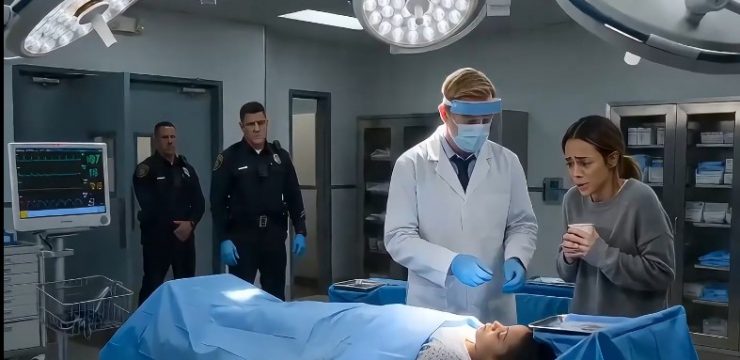
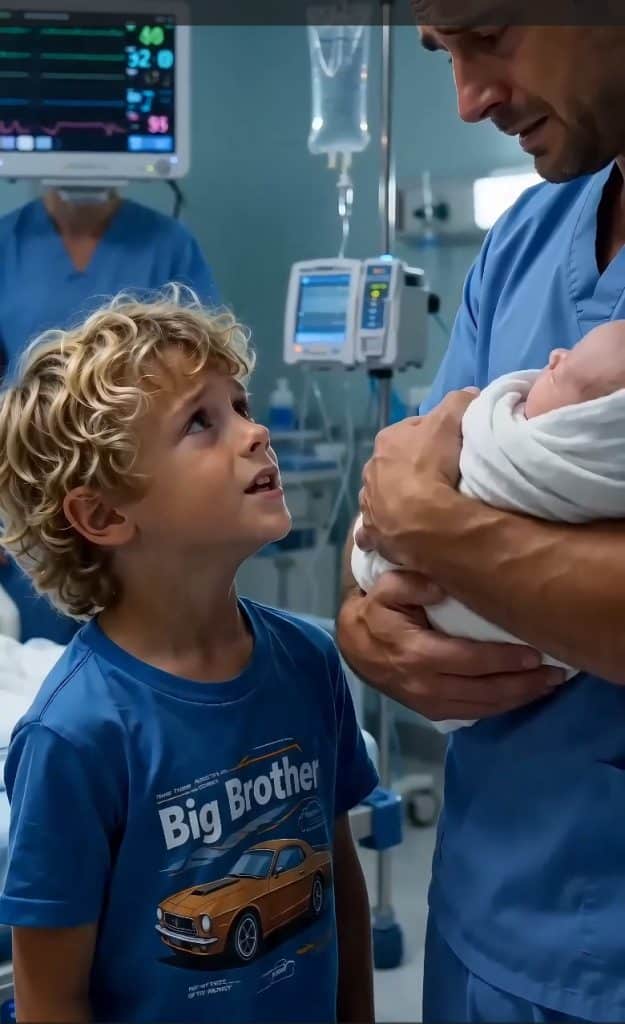
Everything shone beneath the white lights—the polished floor, the metal rails of the bed, the glass on the incubator waiting silently in the corner. Monitors blinked in blue and green. Nurses moved softly, as if footsteps could break what little hope remained.
But the little boy in the blue shirt did not move at all.
He stood beside his father with both hands pressed against his chest, staring up at the tiny bundle in the man’s arms. Across the front of his shirt, cheerful yellow letters read Big Brother, with little cars racing beneath them.
He had picked it out himself three weeks earlier.
Now the words looked almost cruel.
His father, Nathan, held the newborn close to his chest. The baby was wrapped in a white blanket, so small that his face barely rose above the swaddle. His skin was pale. His mouth was still. His eyelids rested shut as if the whole world had become too heavy for him.
Behind them, Emily lay in the hospital bed with one hand pressed over her mouth. Her hair was damp against her forehead. Her eyes were swollen from crying. A nurse stood beside her, rubbing her shoulder, but nothing could comfort a mother who had just heard the words no parent should ever hear.
The room was full of people.
Yet somehow it felt like only three hearts were left inside it—one shattered, one trying not to break, and one too fragile to prove it was still there.
Noah looked at the baby again.
Then he looked up at his father.
“Can I hold him?” he whispered.
Nathan’s face tightened.
The nurse beside him opened her mouth, then stopped. No one wanted to say yes. No one wanted to say no. The moment was too delicate, too final, too terrible.
Noah’s lower lip trembled.
“Please,” he said, his voice cracking. “Just once.”
Nathan closed his eyes.
He had promised himself he would stay strong for his son. He had promised himself he would explain it gently. He had promised himself he would not fall apart in front of an eight-year-old boy who still believed babies came home if you bought them blankets and painted stars on the nursery wall.
But Noah was not asking like a child asking for a toy.
He was asking like someone saying goodbye.
Nathan bent carefully. His hands were steady only because they had to be. He lowered the newborn into Noah’s arms, guiding the boy’s elbow, adjusting the blanket, keeping one hand close in case the weight was too much.
“Be careful, buddy,” he murmured.
Noah nodded without blinking.
He cradled his baby brother against his chest as if the smallest wrong breath could take him away. The white blanket rested against the bright blue shirt. Big Brother sat directly beneath the newborn’s tiny face.
For a moment, Noah only stared.
Then a tear slipped down his cheek and fell onto the edge of the blanket.
“Don’t leave us,” he whispered.
Emily made a sound from the bed, half sob, half prayer.
Noah swallowed hard.
“You have to fight,” he said. “You’re strong.”
The monitors continued their soft, indifferent beeping. Somewhere in the room, a nurse covered her mouth.
Noah leaned closer.
“I believe in miracles,” he breathed. “Just don’t give up.”
The baby’s eyelids fluttered.
No one moved.
Then his mouth opened, and a small, sharp cry cut through the room.
And that was when every adult in the hospital realized the little boy had known something they had almost forgotten.
Act II
Noah had been waiting to become a big brother for seven months, two weeks, and four days.
He counted it that way because his mother had told him babies took time, and Noah believed time was easier to survive when you gave it numbers.
Every morning before school, he leaned close to Emily’s belly and told the baby what he had missed overnight. He described cereal commercials. He whispered secrets about spelling tests. He gave full reports on the neighborhood dog that barked at squirrels but seemed afraid of butterflies.
The baby always kicked when Noah talked.
Emily said it was because his voice was familiar.
Nathan said it was because the baby already knew who would teach him how to build blanket forts.
Noah took the job seriously.
He taped drawings above the crib. He placed a line of toy cars on the windowsill, sorted by color, because he believed babies should come home to order and excitement. He practiced holding a teddy bear while sitting on the couch, elbows tucked exactly how his father showed him.
When Emily asked if he was nervous, he shook his head.
“I’m ready,” he said.
But the adults were not.
Emily’s pregnancy had been difficult from the beginning. Nothing dramatic enough to make everyone panic at first. Just appointments that ran long. Just doctors who used careful words. Just Nathan standing in hallways with his arms folded, trying to understand medical language as a husband instead of a man pretending not to be terrified.
Then, in the final weeks, the baby grew quieter.
Emily noticed first.
A mother always notices.
She would be folding laundry and suddenly stop, hand on her stomach, waiting for a movement that took too long to come. She would lie awake at night, whispering, “Come on, sweetheart,” while Nathan watched her face in the darkness.
Noah noticed too.
One evening, he pressed his cheek against his mother’s belly and frowned.
“He didn’t answer,” he said.
Emily forced a smile. “Maybe he’s sleeping.”
Noah did not smile back.
The next morning, Emily was admitted.
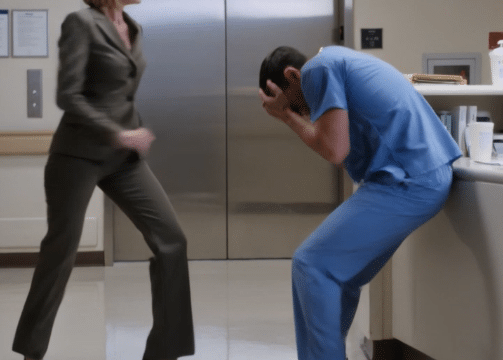
By noon, the room had become a blur of nurses, clipped voices, swinging doors, and Nathan signing papers with a hand that would not stop shaking. Noah sat in the waiting area with his grandmother, still wearing the blue shirt he had begged to put on.
He had wanted the baby to see it first.
When Nathan finally came out, his face told the truth before his mouth did.
Noah stood immediately.
“Is he here?”
Nathan knelt in front of him. For several seconds, he could not speak.
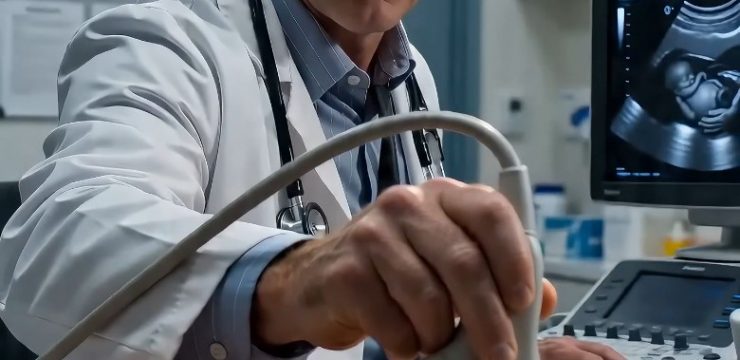
The baby had been born alive, but barely. His breathing was weak. His tiny body had struggled under the pressure of a world he had entered too soon and too hard. The doctors had done everything they could in those first desperate minutes.
But the room had shifted.
Everyone felt it.
That awful change in the air when hope stops being a plan and becomes a wish.
Nathan brought Noah in only because Emily asked.
“She needs him,” she had whispered from the bed. “They both do.”
So Noah walked into the brightest room he had ever seen and found his mother broken, his father pale, and his baby brother silent.
No one told him to say goodbye.
They did not have to.
Children understand more than adults think. They may not know the names of machines or the weight of medical decisions, but they understand faces. They understand silence. They understand when grown-ups stop saying, “Everything will be okay.”
Noah looked at the baby and did not see a tragedy.
He saw the little brother who kicked when he talked.
He saw the crib waiting at home.
He saw the toy cars on the windowsill.
And he refused to let the room decide the ending without him.
That was why he asked to hold him.
That was why he whispered, “You’re strong.”
And that was why, when the cry came, Noah did not scream.
He simply stared down with wide, wet eyes, as if he had been expecting his brother to answer all along.
Then a nurse rushed forward, and the room exploded back into motion.
Act III
The first cry was not loud.
It was not the dramatic, perfect sound people imagine in movies. It was thin, strained, and brief—more like a protest than a promise.
But it was enough.
The nurse closest to Nathan froze for half a second. Then her training took over. She stepped in quickly, gentle but firm, checking the newborn’s color, his movement, his tiny mouth opening again as his face tightened.
“Call Dr. Reyes back,” she said.
Another nurse was already moving.
Nathan stayed crouched beside Noah, one hand on his son’s shoulder and the other hovering near the baby. He looked afraid to touch him. Afraid not to.
Emily pushed herself up against the pillows.
“Was that him?” she cried. “Nathan, was that him?”
Noah looked from the baby to his mother.
“He cried,” he said, barely louder than a breath.
No one answered because everyone had heard it.
The newborn cried again.
This time, Emily sobbed so hard the nurse beside her had to steady her. Nathan covered his mouth with one hand and bowed his head. For one wild second, he looked less like a father and more like a man standing at the edge of the impossible.
Dr. Reyes returned fast, his face controlled, his eyes alert.
He had been the one to speak carefully earlier. He had been the one who told them the situation was critical. He had not been cold. He had simply been honest, and honesty in a hospital can feel like cruelty when it carries bad news.
Now he leaned over the baby in Noah’s arms, listening, watching, measuring every tiny sign.
“Noah,” he said gently, “you did very well. I need your dad to help us now.”
Noah’s arms tightened.
For a flash of a second, Nathan feared his son would refuse.
But Noah looked down at the newborn and whispered, “They’re going to help you.”
Then he let his father lift the baby away.
The medical team moved quickly. Not with panic, but with urgency. The baby was placed beneath warming lights. A nurse adjusted the blanket. Another checked the monitor leads. Dr. Reyes spoke in low, precise instructions that somehow made the chaos feel like a path instead of a storm.
Noah stood beside the bed, empty-armed.
His shirt was wrinkled where the baby had rested.
He looked smaller without him.
Emily reached for him. Nathan guided him to her bedside, and Noah climbed carefully onto the edge of the mattress. His mother wrapped one arm around him and pulled him close, trembling so hard he could feel it through the hospital gown.
“I told him not to give up,” Noah whispered.
Emily pressed her lips to his hair.
“I heard you.”
But the truth did not arrive all at once.
The cry had changed everything, but it had not solved everything. The baby was still fragile. The room still held its breath. Nurses still watched monitors with serious eyes. Dr. Reyes did not smile too quickly, and that scared Nathan more than anything.
Hours passed strangely after that.
Sometimes the baby seemed to improve. Sometimes the silence around the doctors grew heavy again. Emily drifted between tears and exhaustion. Nathan signed more forms. Noah sat in a chair too big for him, staring at the door every time someone walked in.
Near midnight, Dr. Reyes returned.
His expression was different.
Not joyful.
Not grim.
Careful.
“The next twenty-four hours matter,” he said. “But he’s responding.”
Emily shut her eyes.
Nathan gripped the rail of the bed.
Noah looked up. “Responding means he’s fighting?”
Dr. Reyes paused.
Then, for the first time that day, his face softened.
“Yes,” he said. “That is exactly what it means.”
Noah nodded, as if this confirmed something obvious.
“What’s his name?” the doctor asked.
Emily looked at Nathan.
They had chosen the name weeks ago, but fear had stolen it from their mouths all day.
Nathan turned toward the small bed where the newborn lay beneath the soft medical light.
“Samuel,” he said.
Noah sat up straighter.
“Sam,” he corrected quietly. “He likes Sam.”
No one argued.
But before morning came, the family would learn that Sam’s cry had not been the only secret hiding in that room.
Act IV
At 3:17 in the morning, a nurse named Claire found the recording.
It was not supposed to matter.
Hospitals were full of recordings—monitor strips, chart notes, timestamps, scans, routine documentation that turned human terror into files and numbers. But Claire had been in the room when Noah held the baby. She had heard the first cry. She had seen every adult stop breathing.
And something about the timeline bothered her.
The baby had not simply responded after being held.
He had responded to Noah’s voice.
Claire had noticed it once before, hours earlier, when Emily was still in labor and frightened. Noah had been outside the delivery area, speaking through the cracked door because no one had the heart to send him away.
“Hi, baby,” he had whispered. “It’s me. I’m here.”
The monitor had shifted then.
Not dramatically. Not enough to change the plan. But enough that Claire had glanced up.
Now, reviewing the notes, she saw it again.
Small changes. Small responses. Little rises at moments when Noah spoke.
She took it to Dr. Reyes just before dawn.
He read it once, then again.
“Are you saying his brother’s voice stimulated a response?”
Claire folded her arms. “I’m saying he recognized him.”
The doctor did not dismiss it.
Medicine had rules, but human beings had mysteries inside those rules. Babies heard voices before birth. They knew rhythms. They knew comfort before they knew light. No machine could measure love cleanly, but sometimes love left evidence anyway.
By sunrise, Sam was still fighting.
Weakly.
But fighting.
Nathan stood near the nursery window with coffee he had forgotten to drink. His beard was rough, his eyes red, and his scrubs were wrinkled from sitting, standing, praying, and not sleeping. Noah leaned against his side.
“Can he hear me now?” Noah asked.
Nathan looked through the glass at the tiny bed.
“I think he can.”
Noah pressed one hand to the window.
“Hey, Sam,” he said softly. “I’m still here.”
Inside, a nurse looked toward the monitor.
Then she looked back at Noah through the glass.
She smiled.
It was small, but Nathan saw it.
By afternoon, the story had moved quietly through the ward. No one made it loud. No one turned it into gossip. But every nurse who had been there carried it differently.
The boy in the Big Brother shirt.
The goodbye that became a beginning.
The cry that arrived after everyone had run out of words.
Emily finally got to see Sam again that evening. They wheeled her closer, careful with her weakness, careful with the wires, careful with the hope that now felt too precious to hold barehanded.
Noah walked beside her.
For once, he did not ask to hold the baby.
He only stood close and spoke through the clear wall of the incubator.
“I saved your blue car,” he said. “The fast one. But you can’t chew on it because Mom said babies chew on everything.”
Emily laughed.
It came out broken, tangled with tears, but it was a laugh.
Nathan looked at her like he had been waiting a lifetime to hear that sound again.
Then Dr. Reyes stepped into the room with Claire beside him.
“We still have a long road,” he said.
The sentence could have frightened them.
But it did not land the way bad news had landed before. A long road meant there was a road. A long road meant they were not standing at the end anymore.
Emily reached for Nathan’s hand.
Noah kept his eyes on Sam.
The baby shifted faintly beneath the blanket.
Not much.
Just enough.
Noah smiled through fresh tears.
“He heard me,” he whispered.
And this time, no one told him not to hope.
Act V
Sam did not come home quickly.
There were days when the family felt brave and days when bravery felt like something they had used up. There were mornings when Emily cried in the shower so Noah would not hear, and nights when Nathan sat in the hospital parking lot gripping the steering wheel because he could not walk back inside until he remembered how to breathe.
Noah changed too.
He stopped asking when Sam would come home and started asking what Sam did that day.
Did he move?
Did he cry?
Did he hear me?
Every afternoon, Nathan brought him to the hospital after school. Noah would wash his hands carefully, stand on the little step stool near the incubator, and talk.
He told Sam about homework.
He told him which cafeteria pizza was fake good and which one was real bad.
He told him their mother smiled more when he moved.
He told him their father pretended not to cry, but was terrible at it.
The nurses began calling those visits “Sam’s favorite hour.”
Noah believed them.
Three weeks later, Emily held Sam against her chest for the first time.
The room was quieter that day. Softer. The panic had drained out of the walls, leaving behind something tender and exhausted. Nathan sat beside her with one arm around Noah, and nobody spoke for a while.
Sam made a tiny sound in his sleep.
Noah leaned forward immediately.
“That’s his angry noise,” he announced.
Emily laughed again, stronger this time.
Nathan wiped his eyes and did not pretend it was anything else.
A month after the first cry, Claire brought Noah a folded piece of paper.
It was not official. It was not medical. It was just a printout of one tiny strip from the monitor record, framed by her handwriting.
The moment Sam cried.
Below it, she had written one line.
Your voice was the first thing he followed back.
Noah stared at it for a long time.
Then he held it against his chest, right over the faded letters on his shirt.
He wore that same shirt on the day Sam finally came home.
It was too small by then. The hem rode up when he lifted his arms. One of the little cars had cracked from too many washes. Emily offered him a newer shirt that morning, but Noah shook his head.
“He knows this one,” he said.
So Nathan carried the car seat through the front door, Emily followed with trembling hands, and Noah ran ahead to make sure everything was ready.
The crib.
The blanket.
The stars on the wall.
The blue toy car waiting on the shelf, far enough away that no baby could chew on it.
Sam slept through the entire arrival, unaware that he had returned to a house that had nearly become a museum of grief. Unaware that every corner had held its breath for him. Unaware that his brother had refused to let the world close its hand around him.
But Noah knew.
That night, after visitors left and the house grew quiet, Nathan found Noah sitting beside the crib in the nursery. The little boy had dragged a pillow onto the floor and wrapped himself in a blanket.
“What are you doing, buddy?” Nathan whispered.
Noah looked up, sleepy but serious.
“Just in case he forgets I’m here.”
Nathan crouched beside him.
Sam stirred in the crib. His tiny mouth moved. His eyelids fluttered the way they had in the hospital, that fragile little motion that once froze an entire room.
Then he made a small sound.
Not a cry this time.
Just a soft, living noise in the dark.
Noah smiled.
Nathan put a hand over his son’s shoulder and looked into the crib at the baby they had almost lost before they ever knew him.
Emily appeared quietly in the doorway, one hand resting against the frame.
For a moment, none of them moved.
The house was still. The night was still. But the silence no longer felt empty.
It was full of breath.
Full of second chances.
Full of a little boy’s faith and a newborn’s answer.
Noah reached through the crib bars with one careful finger, not touching Sam’s face, only letting him know he was close.
“I told you,” he whispered.
Sam slept on.
But his tiny hand opened.
And somehow, in the soft blue glow of the nursery night-light, it looked like he had been holding on all along.