Act I
“It’s for my little sister…”
The thirteen-year-old boy barely got the words out before the young man standing over him laughed.
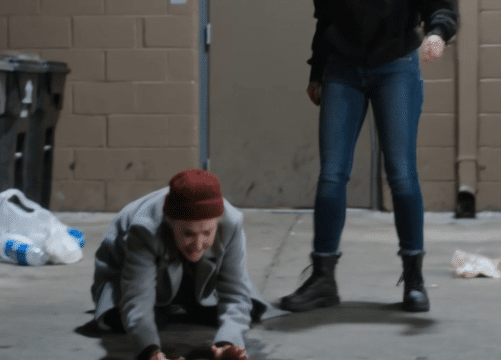
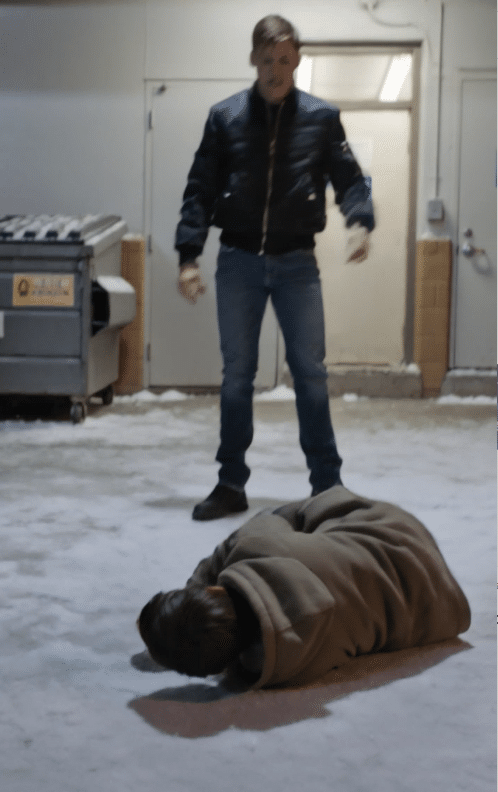
The wrapped loaf of bread lay in the snow beside a dumpster, its plastic torn where it had struck the cold concrete. The boy dropped to his knees to retrieve it, brushing snow from the crust with trembling fingers. He wasn’t looking for trouble. He was trying to save dinner.
Then the man in the black bomber jacket rushed forward and kicked him hard in the back.
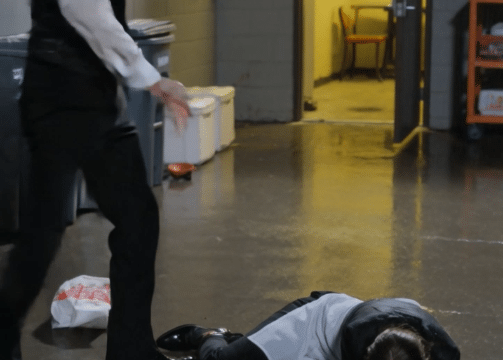
The boy fell face-first onto the snowy ground, his chest hitting the concrete beside the loaf. His elbow struck the pavement, leaving a thin trace of blood against his skin. For a moment, he could only grimace and gasp, struggling to pull air into his lungs while snow settled on his hood.
The bread had rolled just beyond his hand.
He reached for it anyway.
The young man stepped over him and delivered two more forceful kicks into his back and side. The boy curled around himself, instinctively trying to protect his ribs, then stretched one arm toward the bread as if it were something precious enough to risk another blow.
“Trash. Even your bread looks homeless.”
Behind the attacker, two of his friends laughed uncertainly. Their amusement had begun as a private joke, the kind people tell themselves when they want to feel powerful at someone else’s expense. Now their laughter faltered beneath the shocked silence of the alley.
A restaurant worker stood frozen near the back door. Another person peered from the dim kitchen window, one hand pressed to the glass. Nobody approached the boy. They watched, horrified, as though the cruelty itself had made the narrow alley dangerous.
The boy’s name was Noah Miller.
He was thirteen, thin for his age, and wearing a brown hoodie several sizes too large beneath a cheap coat that no longer kept out the cold. His sneakers had split near the toes, and the damp fabric of his sleeves clung to his wrists.
He had learned to walk quickly, keep his eyes down, and never let strangers know how frightened he was.
But he had one weakness he could not hide.
His little sister, Lily.
She was seven years old, and she was waiting in a borrowed room a few blocks away, wrapped in a blanket that smelled faintly of dust and detergent. Noah had told her he would bring back food. He had promised her that he would find something before the restaurant closed.
The loaf had come from a small discount shelf near the end of the evening. It wasn’t fresh, and the packaging was already wrinkled, but it was food. Noah had counted the coins in his pocket twice before buying it.
He had imagined Lily’s face when he returned.
Now he was on the ground, trying to keep the bread from being ruined.
“Go feed her snow,” the man said.
Noah’s eyes filled with tears. He pressed his lips together, determined not to cry in front of the people who were enjoying his humiliation.
He wanted to tell the man that Lily was hungry. That she had given him the last bite of a granola bar that morning because she thought he needed it more. That he had promised their mother, before she died, that he would always look after his sister.
Instead, he reached for the loaf again.
The young man smirked.
Then the sound of an engine cut through the falling snow.
A black car stopped sharply at the entrance to the alley, its headlights illuminating the dumpsters, the restaurant’s back door, and the boy curled beside the bread.
The driver’s door opened.
A man in a long black coat stepped into the snow and looked directly at Noah.
He didn’t ask what had happened.
He went straight to the bread.
And the young man who had been laughing suddenly found himself standing between a frightened child and someone who would not laugh with him.
Act II
The older man bent down and picked up the loaf.
He brushed the snow from its wrapper with slow, careful movements, as though he understood that it was more than a piece of bread. Then he turned and placed himself between Noah and the young man in the bomber jacket.
“Don’t touch him again,” he said.
There was no shouting in his voice. No dramatic threat. Yet the words seemed to empty the alley of everything except the sound of falling snow.
Noah looked up.
The stranger was in his late fifties, with silver beginning to show at his temples and the composed bearing of someone accustomed to making decisions that other people followed. His coat was expensive but understated, and his expression carried none of the disgust Noah had seen in the faces of so many adults.
The man crouched beside him.
“Can you hear me?”
Noah nodded.
“Does anything hurt badly?”
Noah hesitated, then nodded again.
The stranger didn’t pull him upright or grab his arm. He asked him to stay still while he checked whether he could respond clearly, then signaled to the restaurant manager, who had appeared in the doorway.
“Bring a first-aid kit. Call for medical assistance if he needs it. And get someone to find out whether there’s another child waiting for him.”
The manager stared at him for half a second before moving.
He knew exactly who the man was.
His name was William Hart, the founder and owner of Hartwell Dining Group, a restaurant business that had grown from one neighborhood diner into a respected regional chain. He owned the building, the restaurant, and several of the properties surrounding it. His name appeared on contracts, staff paychecks, and the annual scholarship fund that helped local teenagers train for careers in hospitality.
But the people who worked for him knew something else.
William had spent much of his life remembering what it meant to be hungry.
When he was seventeen, his father had disappeared and left the family with debts they could not pay. His mother worked double shifts at a diner, and William sometimes waited behind the restaurant after closing, hoping a cook would have something left over.
He remembered the humiliation of pretending not to be hungry.
He remembered how some adults looked through him, as if acknowledging his existence would obligate them to care.
One winter evening, a cook had slipped him a hot meal in a paper container and told him not to worry about paying. The man hadn’t asked for his story. He hadn’t demanded gratitude. He had simply opened a door and given a hungry boy something to eat.
William had never forgotten that moment.
Years later, when he could afford to do more than remember, he built a business that included a simple rule: no one who came to the back door asking for food should be mocked or treated as a nuisance. Staff had a process for handling requests safely and respectfully, and unsold food was regularly directed to local support programs.
The rule did not solve homelessness. William knew that. But he believed that a person’s worst day should not be made worse by someone who had more than enough.
Now he looked at Noah’s torn sneakers, his shaking hands, and the loaf he had tried so desperately to protect.
“What’s your name, son?”
“Noah.”
“Is there someone I can call for you?”
Noah’s face changed.
“My sister.”
William waited.
“She’s waiting for me,” Noah whispered. “I told her I’d bring food.”
The boy’s voice cracked on the last word.
William glanced at the bread in his hand, then toward the kitchen door. He could see the manager standing inside, uncertain whether to approach the scene or wait for another instruction.
William gave him a brief nod.
The manager moved at once.
The young man in the bomber jacket let out a dismissive laugh.
“This is ridiculous. The kid was digging around back here. We were just messing with him.”
William slowly turned his head.
“You kicked a child who was trying to pick up his food.”
“He fell.”
“After you kicked him.”
The young man’s friends stopped smiling.
He shifted his weight, glancing toward the restaurant door as though he expected someone to step forward and agree with him. Nobody did.
William returned his attention to Noah.
“You said your sister is waiting?”
Noah nodded quickly, fear returning to his face.
William looked at the manager.
Then he gave the order that would change the entire evening.
Act III
“Open the kitchen. Feed them both.”
The manager didn’t hesitate this time.
“Yes, Mr. Hart.”
He pushed the back door wider and called inside. The dim kitchen suddenly seemed warmer, its lights spilling across the snow. A cook appeared at the service counter, followed by another employee carrying a clean towel and a bottle of water.
Noah stared at the doorway.
He had expected to be chased away. He had expected someone to tell him that he was making a mess, that he didn’t belong there, that the restaurant was closed and the food was not for people like him.
Instead, the manager was asking what his sister liked to eat.
Noah blinked at him.
“Anything,” he said.
The answer came too quickly, too automatically.
William heard it and felt an old memory stir. He remembered giving the same answer when a waitress asked what he wanted from the diner menu he couldn’t afford. He had learned to ask for nothing because asking for something specific meant risking disappointment.
“Anything isn’t a choice,” William said gently. “We’ll find something she likes.”
Noah’s eyes filled again.
He tried to wipe them with his sleeve, but his hand was shaking. The cook brought a warm towel and set it within reach. William stayed beside him while the manager called for medical help and asked one of the staff members to contact a local youth outreach service that could assist with the siblings’ immediate needs.
The young man in the bomber jacket watched the entire scene with growing disbelief.
“Wait. You’re actually opening the kitchen for them?”
William looked at him.
“Yes.”
“Both of them?”
William’s expression remained steady.
“Both.”
The young man shook his head, as though the answer were a personal insult.
“This is why people take advantage of you. You give them one thing, and suddenly they think they deserve everything.”
William stood.
“Noah asked for bread. You answered by kicking him.”
“He’s not even my responsibility.”
“Neither is your dinner, your car, or your coat the responsibility of a thirteen-year-old child. Yet he was careful not to damage any of them while you were hurting him.”
The young man opened his mouth, then closed it.
His name was Tyler Grant. He was twenty-four and had spent the evening with two friends, showing off the confidence that came from believing consequences were things that happened to other people. He had not known Noah before that night. He knew nothing about the boy’s family, his circumstances, or why he was carrying bread through the alley.
He had simply seen someone vulnerable and decided that vulnerability was an invitation.
Tyler’s friends had followed his lead because laughing had seemed easier than challenging him. Now, with William standing between Tyler and the boy, neither friend seemed eager to defend what they had witnessed.
One of them looked toward the ground.
The other stepped away from Tyler.
William noticed, but he did not turn the moment into a lecture. His first concern was still Noah.
“Can you tell me where your sister is waiting?” he asked.
Noah hesitated.
He had been warned about strangers. He knew that adults could make promises they did not keep. He knew that being offered help sometimes came with questions he couldn’t answer or demands that frightened him.
But William hadn’t asked him to explain why he was poor.
He hadn’t asked why he and Lily were not at home.
He had picked up the bread first.
That small act had told Noah something words could not.
“She’s at a room on Mercer Street,” he said quietly. “A woman from the shelter let us stay there tonight. We couldn’t get a bed together at the main place.”
William nodded, taking care not to press him for more details in front of the crowd.
“Then we’ll make sure she’s safe, too.”
Noah looked at him with a sudden, frightened intensity.
“You won’t send her away?”
The question struck William harder than the boy could have known.
“No,” he said. “We’re going to find out what she needs, and we’re going to help you both get somewhere safe tonight.”
For the first time since the attack, Noah’s shoulders lowered a fraction.
Inside the kitchen, a cook began preparing a hot meal. Another employee found a clean paper bag for the bread, though William had already asked that the boy receive fresh food as well. The manager returned with a blanket and quietly explained that medical help was on the way.
Tyler looked around the alley.
The employees were listening to William. The manager was following his instructions. His own friends had stopped laughing. Even the witnesses near the restaurant door had moved closer—not to crowd Noah, but to make room for the people who were finally helping him.
Tyler had spent the night trying to make a child feel powerless.
Now he was the only person in the alley who seemed unable to understand what was happening.
And William Hart had not yet told him what would happen after the food was served.
Act IV
The kitchen door remained open, allowing warm air to drift into the alley.
Noah sat on a low chair just inside the threshold, wrapped in a blanket while a staff member stayed nearby. He was still frightened and in pain, and the manager made sure that he was not moved unnecessarily before the responders could assess him.
A plate appeared on the counter.
Warm soup. A sandwich. Fresh bread. A small carton of milk.
Noah stared at the food as if it might disappear if he reached for it too quickly.
“Can I take some for Lily?” he asked.
The cook nodded.
“Of course.”
Noah’s hands tightened around the edge of the blanket.
“And can I take this whole sandwich? She likes the cheese ones.”
The cook’s expression softened.
“We’ll make her a fresh one.”
William stood nearby, listening without interrupting. He asked the manager to arrange a safe way for the siblings to be reunited and to contact the youth outreach worker who could help them access shelter and other support. He also made it clear that no one should make promises about their longer-term situation until the appropriate people had assessed what they needed.
He could provide food, warmth, transportation, and resources.
He could not pretend that one dinner would resolve everything that had brought them to his restaurant’s back door.
That honesty mattered.
Noah needed more than a generous stranger for one night. He needed a safe place to sleep, reliable access to food, and adults who would keep their word after the immediate shock had passed.
William intended to make sure the first steps were taken.
Outside, Tyler began to pace.
“This is insane,” he muttered. “You don’t even know these kids.”
William stepped back into the alley, leaving Noah with the staff.
“No,” he said. “I don’t know everything about them.”
“Then why are you acting like they’re your family?”
William glanced toward the open kitchen door.
“Because they need help.”
Tyler scoffed.
“People need help all the time. You can’t save everybody.”
William considered him for a moment.
“You’re right. I can’t save everybody.”
Tyler seemed relieved, believing he had finally found a point on which they could agree.
Then William continued.
“But I can decide not to hurt a child. I can decide not to humiliate someone who has less than I do. And when a child is hungry outside my restaurant, I can make sure there’s food inside.”
Tyler’s expression tightened.
“You’re making me sound like some kind of monster.”
“I’m describing what you did.”
The words landed without drama, leaving Tyler with nothing to push against except the facts.
William did not threaten to ruin him. He did not promise that money or influence would be used to punish him. Instead, he told the manager to preserve any available security footage and asked the witnesses to share what they had seen with the responding officers.
The incident would be documented. Tyler would have to answer for his actions through the appropriate process.
The restaurant would not erase the footage because Tyler knew someone, and William would not turn the matter into a private deal designed to make it disappear.
Tyler glanced at his friends.
“Say something,” he demanded.
Neither answered immediately.
Finally, one of them spoke.
“You kicked him, man.”
Tyler stared at him.
“You were laughing.”
“I stopped.”
The simple response seemed to disturb Tyler more than an argument would have. His friends had not suddenly become heroes. They had stood by while a child was hurt. But now they were beginning to understand that following Tyler’s lead had made them part of something shameful, and they no longer wanted to pretend otherwise.
A vehicle pulled up near the alley entrance. One of the staff members went to meet the arriving responders and explain the situation.
William turned back toward the kitchen.
Noah was holding a sandwich in both hands, eating slowly as though he was trying to make it last. Beside him, a paper bag had been filled with food for Lily. A cook had added a second sandwich and a wrapped portion of soup, making sure there would be enough for both children.
Noah looked up when William approached.
“Thank you,” he whispered.
William pulled up a chair, keeping his voice quiet.
“You don’t owe me anything for eating.”
Noah looked down at the sandwich.
“My mom used to say that.”
William waited.
“She said people should help each other when they can. Before she died.”
The boy’s face tightened, and he swallowed hard.
“I told Lily I’d take care of her.”
William did not offer a hollow promise that nothing bad would ever happen again. He knew how easily adults could damage a child’s trust by saying more than they could guarantee.
Instead, he answered carefully.
“You shouldn’t have to do everything alone, Noah.”
Outside, Tyler had gone completely silent.
For the first time, he was watching the boy not as a target, but as a child who had been carrying a burden far heavier than a loaf of bread.
And when William stepped back into the alley, he was ready to make sure Tyler understood that the evening was not going to end with a joke.
Act V
The snow kept falling, softening the edges of the dumpsters and covering the footprints near the restaurant’s back door.
Inside, the kitchen was warm.
Noah finished his sandwich, then carefully folded the empty wrapper instead of dropping it on the floor. He was still nervous about taking up space. When a cook offered him another portion of food, he glanced toward William before accepting it, as though he needed permission to believe the offer was real.
William gave him a small nod.
“There’s enough.”
The words were simple, but Noah held on to them.
A staff member helped coordinate the next steps with the responding team and the local youth outreach service. They would work to reunite Noah and Lily safely, assess their immediate circumstances, and connect them with appropriate support for the night ahead.
William asked the manager to make sure the siblings received a proper meal together as soon as it was safe to do so. He also authorized the restaurant to provide food for the following days while the outreach workers helped identify more stable arrangements.
He did not ask for a photograph.
He did not announce a donation or call anyone to witness his generosity.
The kitchen remained open because two children were hungry.
That was enough.
When Noah was ready, a staff member placed the bag of food in his hands. He checked it twice, making sure the sandwich was there, then held it against his chest.
“Lily’s going to be happy,” he said.
William smiled faintly.
“Then let’s make sure she gets it.”
Outside, Tyler stood beneath the weak light above the back door. His friends had moved away from him, and the witnesses were speaking with the authorities. He kept looking at the kitchen, where the child he had kicked was receiving the food he had tried to destroy.
Tyler had imagined the scene ending with laughter.
He had expected Noah to run away, leaving the alley quiet enough for everyone to forget what had happened. He had believed that a homeless child could be hurt without consequence because nobody important would care.
But William Hart had cared.
The manager had cared.
The witnesses who had frozen at first were finally speaking.
And Noah, despite his fear, was still holding the bread for his sister.
William came to the doorway and looked at Tyler.
“What you did tonight will be documented,” he said. “The witnesses can speak for themselves, and the authorities will decide what happens next. I won’t make it disappear for you, and I won’t use this child’s suffering to make a spectacle of you.”
Tyler swallowed.
For once, he had no clever reply.
William turned back toward the kitchen, where the staff were preparing another meal and making arrangements for the children. He had no interest in winning an argument with a young man who had mistaken cruelty for strength.
There was more important work to do.
Noah stood near the counter, the food bag tucked safely beneath his arm. He looked small beneath the oversized hoodie, but something in his expression had changed. He was still frightened, still uncertain about what would happen tomorrow, but for the first time that night, he was no longer trying to solve everything by himself.
William approached him.
“Ready to see your sister?”
Noah nodded quickly.
“Can I give her the bread first?”
“Of course.”
The boy looked down at the loaf, its wrapper now protected inside a clean bag. A few grains of snow remained caught in the folds of the plastic. It was an ordinary loaf, inexpensive and slightly misshapen, but Noah had fought to save it because it represented a promise he had made to the person he loved most.
William understood that the bread mattered.
He also understood that the children needed far more than bread.
As the staff prepared to help Noah reach Lily safely, the restaurant door remained open, its warm light stretching into the snowy alley. The scene that had begun with humiliation was ending with food, shelter planning, and adults finally taking responsibility for the safety of two children.
Tyler watched from outside, his mocking confidence reduced to a baffled stare.
He had believed helping one child meant surrendering to every demand in the world. He could not understand why William would open a kitchen, call for support, and feed a second child he had never even met.
He looked toward the doorway, his expression caught between disbelief and reluctant fear.
“Both?”