Act I
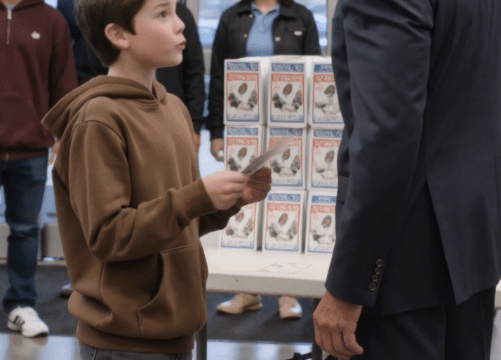
The theater lobby buzzed with excitement as families lined up beneath glowing movie posters.
A staff member spotted the teenage girl in a wheelchair waiting patiently near the back of the queue.
“Come on up,” the employee said warmly. “We’ll help you first.”
Before the girl could reach the ticket counter, an angry voice cut through the lobby.
“Trash. Why do you get to go first?”
Heads turned.
The woman who had shouted stepped out of line, furious that someone else had been given priority.
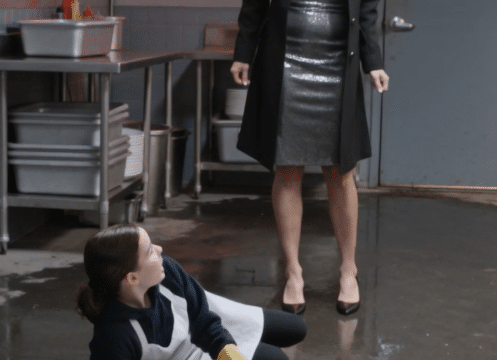
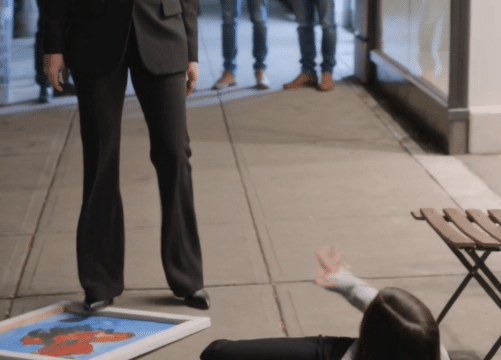
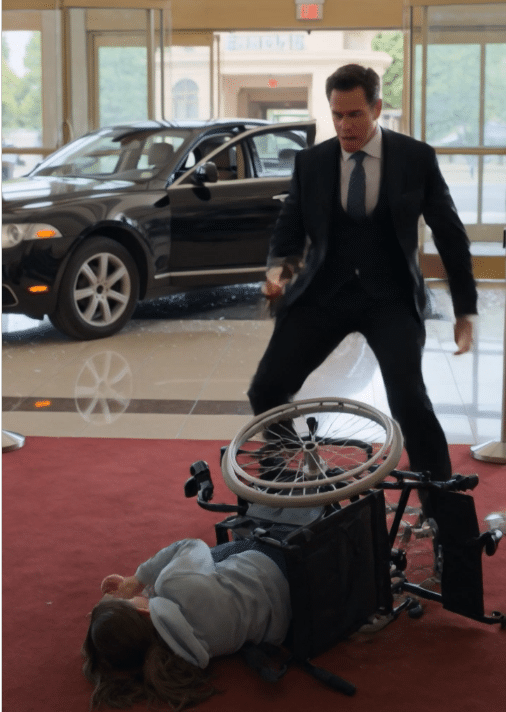
In the confusion, the girl lost her balance and was thrown from her wheelchair, landing painfully on the red carpet. Her chair tipped onto its side, one wheel spinning as shocked customers gasped.
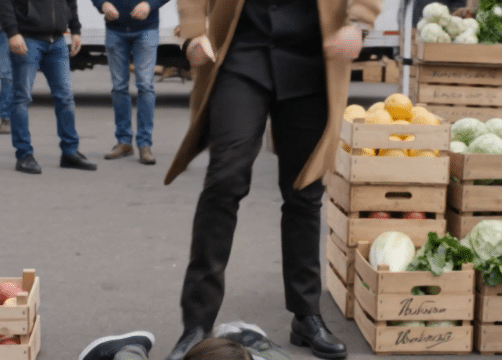
The woman stood over her.
“Wait on the floor.”
No one expected those words to be the biggest mistake she would ever make.
Act II
The fifteen-year-old had never liked attention.
Although she lived comfortably, she insisted on doing ordinary things without an entourage or special treatment beyond what her wheelchair required.
Her grandfather often encouraged her independence.
“People show their true character,” he would tell her, “when they think no one important is watching.”
That afternoon she had come to see the newest movie with friends.
The theater staff recognized her accessibility reservation and simply invited her forward according to policy.
To everyone else, she looked like any other teenager.
No designer clothes.
No security.
No hint that she belonged to one of the most influential families connected to the building itself.
Then the front entrance exploded with noise.
Act III
Outside, tires screeched.
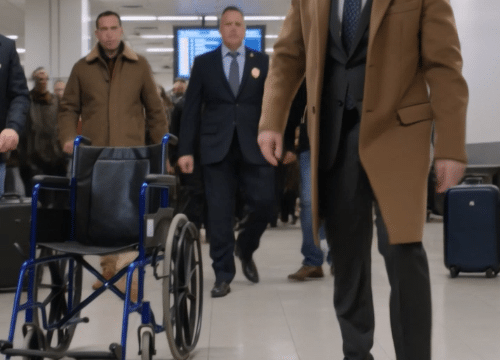
A luxury car stopped abruptly beyond the theater entrance as security personnel rushed inside.
The lobby fell silent.
Ignoring the frightened crowd, an older man hurried straight toward the girl, kneeling beside her before anyone else could speak.
His hands trembled as he helped her sit upright.
“Are you hurt?”
Only after making sure she was safe did he slowly stand.
His eyes locked onto the woman.
“Who dared hurt my only granddaughter?”
The words echoed through the theater.
Employees froze.
Managers exchanged stunned looks.
Several customers immediately recognized the older man.
He wasn’t just a worried grandfather.
He owned the entire building.
Act IV
The atmosphere changed in an instant.
The theater manager hurried forward, apologizing repeatedly while employees carefully brought the wheelchair upright again.
Security quietly formed a respectful circle around the teenager—not to create a spectacle, but to give her space.
The woman who had been shouting moments earlier suddenly found herself unable to speak.
She looked from the grandfather to the staff, then back to the frightened girl.
Everything finally made sense.
The priority service.
The immediate response.
The respect everyone suddenly showed.
It had never been about privilege.
It had been about kindness—and accessibility.
She had mistaken compassion for favoritism.
Now the entire lobby was watching her.
Act V
The young girl accepted her grandfather’s hand and slowly settled back into her wheelchair.
She was shaken, but she lifted her head with quiet dignity.
Looking across the silent lobby, she spoke softly.
“I only wanted to watch a movie like everyone else.”
Not one person could meet her eyes.
The grandfather thanked the employees who had tried to help before escorting his granddaughter toward the exit.
As the crowd slowly parted, the woman remained standing alone.
Her confidence had vanished.
Her voice barely rose above a whisper.
“Your… granddaughter?”
No one answered.
The spinning wheel of the wheelchair finally came to rest.
The lesson had already been learned.
A person’s worth is never measured by where they stand in line—but by how others choose to treat them when they believe no one important is watching.